
Pay special attention to Walmart’s big alignment news from Cannes. Retail media’s future may be in clearer focus.
By Doug Chavez, Mars United Commerce
There are always a lot of announcements during Cannes. Many are vapor, taking advantage of the attention given to most anything Cannes-related. There may have been one you missed this year that was not vapor.
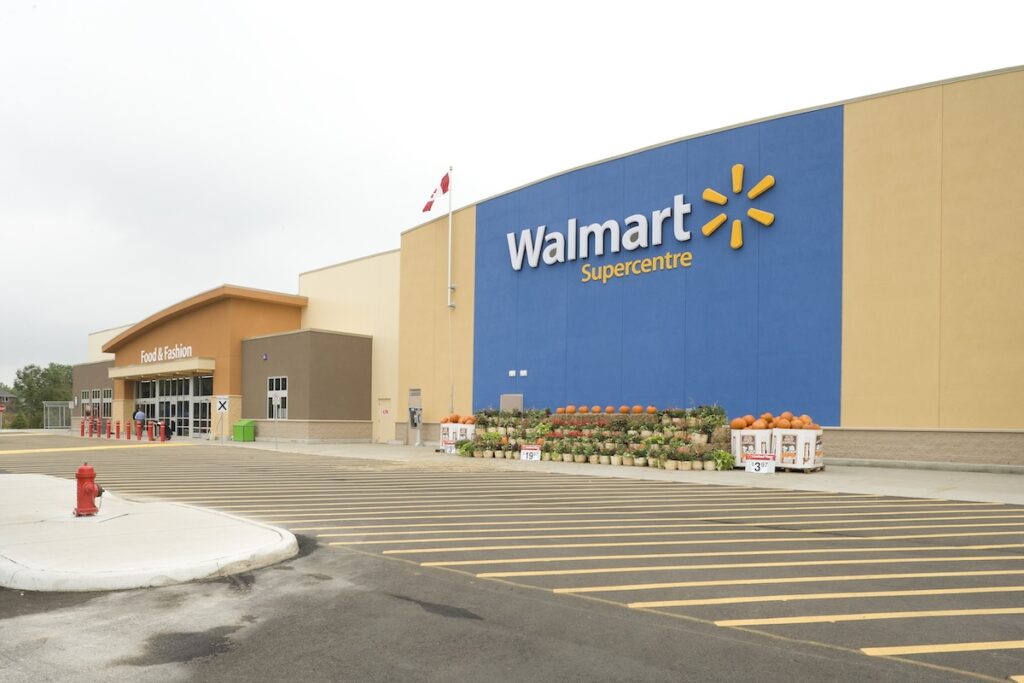
Walmart announced something much larger than a rebrand. The Sam’s Club Member Access Platform (MAP) is now Sam’s Club Connect. That is the surface change. Underneath it, Walmart Connect U.S., Walmart Connect International, and Sam’s Club are unifying onto shared technology, shared measurement, and one global commerce media vision.
I have collaborated with Walmart’s Seth Dallaire across multiple chapters of his career: at Amazon, at Instacart, and Walmart — now as Chief Growth Officer. What he and the team just announced is not cosmetic. It’s the clearest enterprise-scale proof point yet for an argument I’ve made a few times this year, from a Path to Purchase Institute panel on in-store retail media budgets to the Athena Project in London: retail media’s central failure was never strategy. It was fragmentation.
Every banner, every membership program, every marketplace built its own advertising stack in isolation. Advertisers bought scale in pieces and measurement in fragments. No single entity owned the full customer journey, so none could price it, or defend it, with rigor.
At the P2PI panel, I made the same argument about in-store media specifically: the budget gap is not a proof problem, it’s a planning problem. In-store is appended to the plan after strategy and funding are already set and gets treated as a tactic rather than a growth driver. Walmart’s announcement is that same diagnosis, applied at enterprise scale. The remedy is not better proof of performance. It is better sequencing of infrastructure.
The retailers who win next will stop treating channels as separate businesses and instead treat them as one system on shared infrastructure. Dallaire’s own framing was direct: the future of commerce media is not advertising in a single channel; it’s understanding customers wherever they choose to shop. That’s an orchestration statement, not a channel statement.
Three points that warrant your attention here:
Sequencing. Walmart kept the three businesses operationally distinct while unifying the technology layer beneath them. Why? Infrastructure consolidates first. P&Ls do not need to merge for a shared measurement spine to take hold and go-to-market stays close to the customer.
Economics. Global advertising revenue grew 37% last quarter. Walmart Connect U.S. grew 44% excluding VIZIO (more on VIZIO later). Orchestration is not a philosophical preference. It is a demonstrated growth lever.
Trust. This is a starting position, not a finished one. The harder work is proving that shared infrastructure produces impact measurement advertisers can trust, not merely a shared brand identity. Consolidating the tooling is a straightforward announcement. Consolidating truth is the test that matters to any CFO underwriting retail media spend.

There is a longer-term implication for how brand budgets move, although not an immediate one. Walmart’s consolidation does not unlock cross-bucket budget access on its own; that authority sits with the advertisers, not the platform, and will not shift quickly.
What changes is the evidentiary case. A shared measurement standard removes the excuse for keeping national media, shopper, and retail media budgets siloed against three conflicting sets of numbers. Once those buckets are measured against one honest standard, the internal argument for reallocating dollars becomes easier to win, even as governance stays exactly where it sits today. Expect that shift over the next several planning cycles, not this one.
The takeaway for brands and agencies is not to replicate Walmart’s build. It’s to stop optimizing channels in isolation. Architect toward one system, one measurement spine, and one honest standard of truth, even where the org chart stays separate longer than the strategy implies.
Walmart did not just rename a platform. It named the direction the industry is now required to follow.
About the Author

Doug Chavez is EVP, Global Retail Channel Strategy at Mars United Commerce, where he leads connected commerce for the global OneMars business. With more than two decades of experience across agencies, platforms, and brands, he specializes in translating retail media complexity into integrated strategies that drive measurable growth at scale.