
Success in the physical store now requires commerce marketers to fully connect all shopper touch points, according to speakers at P2PI’s new conference.
Any attendees of the InStore Ignite conference in Chicago this month who expected to only discuss the physical store would have been sorely mistaken. They also likely arrived at the event somewhat out of touch with the current marketplace, where the traditional brick-and-mortar store isn’t a standalone (some might claim outdated) shopping channel but an increasingly critical hub for all forms of commerce.
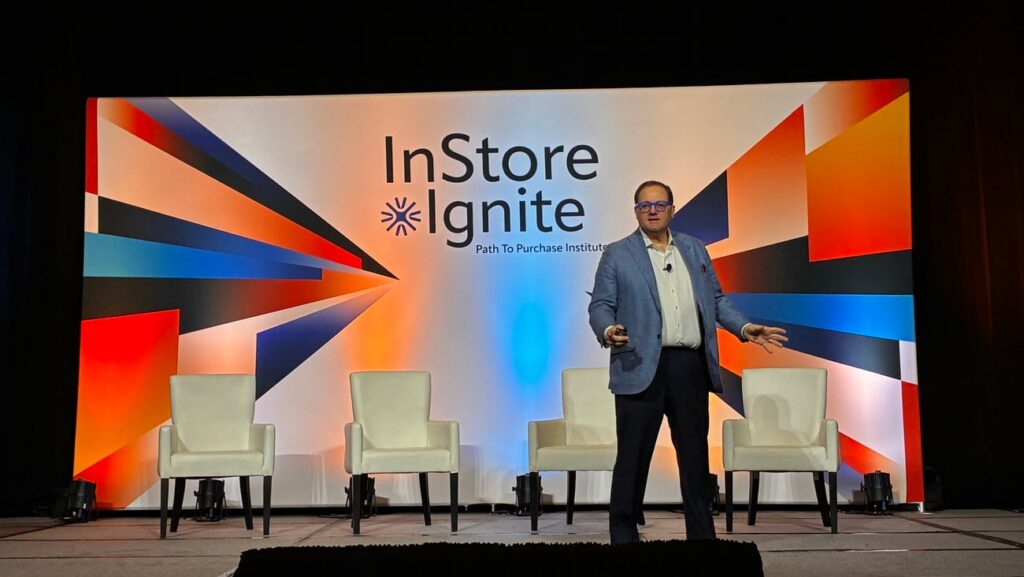
Regardless of their core topic, speakers and panelists at Path to Purchase Institute’s refocused fall event (formerly known more broadly as P2PI Live) invariably discussed the need for retailers and brands to transform the physical shelf by connecting it to the digital, social, and now agentic shelves to give omnichannel shoppers everything they need to make informed purchased decisions while creating an engaging store environment that will keep them coming back.
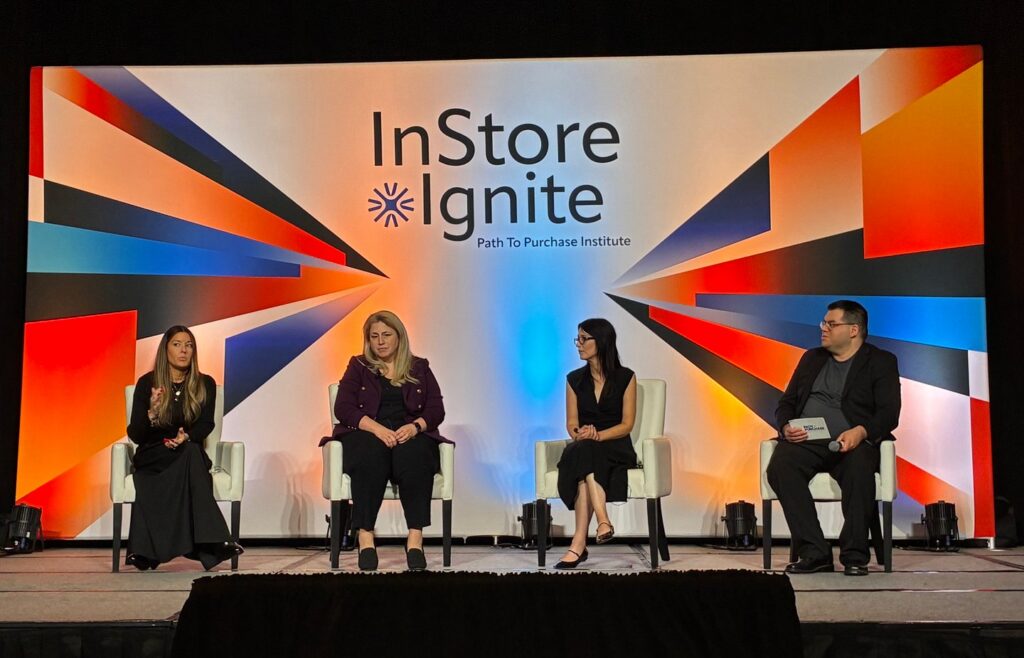
The event’s agenda included Jason Goldberg (pictured above), Chief Commerce Strategy Officer at Publicis Groupe, who explored the evolution of product discovery from Procter & Gamble’s “First Moment of Truth” at the store shelf to the growing potential for generative AI-enabled agents to be doing much of the discovery.


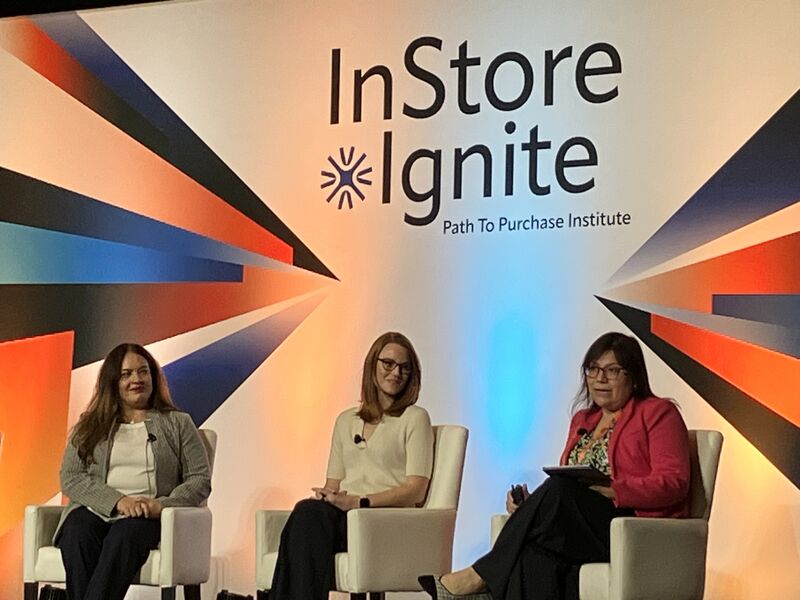
Two members of Mars United’s Retail Consultancy team, SVP-Client Solutions Brooke Roller (at left) and Director Lisa Lally (at right), were certainly not misguided in their expectations, and returned from the event with a shopping cart-full of actionable takeaways for brands looking to better stand out in physical stores by more effectively connecting shopper engagement across all commerce channels.
ACTIONABLE TAKEAWAYS:
1. Prepare for agentic commerce.
Large language model-enabled agents are quickly becoming a new “first moment” of discovery as shoppers move from traditional search and social influencers as their go-to sources.
It’s the latest compression of the digital path to purchase: What initially required 22 clicks first became four, then one — and is now poised to become zero when agents start making purchases. And most retailers aren’t ready for this shift.
As outlined by Goldberg during his keynote, agentic commerce encompasses three kinds of agents that all could be assisting a single shopper:
Horizontal: General third-party assistants such as ChatGPT, Claude, Gemini, and Muse.
Vertical: A growing number of retailer-operated agents, led by Amazon’s Alexa for Shopping and Walmart’s Sparky.
Personal: Agents tasked by individuals to shop and maybe even make purchases on their behalf. The disintermediation of humans from the act of shopping could be as stark as commands such as, “Hey robot, never let me run out of ingredients for my kid’s lunch,” Goldberg warned.
Brand Action Item: Make product data agent-readable, set content guardrails, and monitor the queries on agentic platforms so you understand the content needed to stay visible in recommendations.
2. Buy the occasion, not the placement.
When it comes to the store environment, the concept of thinking “beyond the shelf” includes secondary merchandising and other on-location activity, but it also involves an audience-focused, occasion-driven strategy that builds relevant moments of engagement.
Online behavior can be used to reveal where the brand’s story should appear, both inside the store and throughout the commerce journey, if brands can:
- Identify the signal. Social listening and tracking trends in both traditional search terms and LLM conversations can help brands identify what shoppers want quickly and adapt accordingly.
- Find the moment. Connect the product to something shoppers care about rather than simply securing a product display or a digital ad. Deliver an authentic story and/or relevant solution; cross-category experiences are a great way to do both. Drive trial by tapping into social trends.
- Keep building the connection. Carry that authentic story across all four shelves to sustain the message and maintain the interaction.
Brand Action Item: Like the above header says, lead with the occasion. A new media placement is valuable only when it facilitates a more relevant reason to engage with shoppers.
3. Satisfy the choosy shopper.
Economic pressures are leading many shoppers to seek greater value, which is altering trip patterns, increasing in-home dining occasions, weakening brand and store loyalty, and reshaping their definition of a “good choice.”
Shoppers aren’t necessarily trading down, but they are being choosier about purchases, treating value as a preference rather than a constraint. In short, “Shoppers didn’t get cheaper. They got choosier,” said R.J. Hottovy, Head of Analytical Research for Placer.ai.
Trips have become more frequent, with smaller baskets, and shoppers are more willing to add another stop rather than settling for an alternative product. These fill-in trips could be leading to loyalty shifts among retailers.
Brand Action Item: Resist the urge to focus solely on price promotions and clearly state the value your brand offers to these choosier shoppers. A good brand story backed by a smaller incentive could do the trick more effectively.
4. Get noticed to get in the basket.
As retail media continues moving into the store, marketers need to make sure they’re adding value to the experience and not just piling on more messages. Retail media is far more powerful when the brand creates a meaningful presence that helps the retailer enhance the shopping occasion.
To make sure that happens, brands should:
- Work with the retailer’s merchandising team along with the retail media network to build stronger digital and in-store experiences.
- Start by identifying the shopper moment to be influenced, then determine the potential role of in-store screens, audio, social, recipes, and content.
- Budget the creative and measurement work together; each brand keeps its role and KPIs are agreed before start.
Brand Action item: Budget appropriately for the shopper experience and retailer’s overall content system — not just for the available in-store media inventory.
5. Create one connected view across shelves.
In-store retail media and other brand-funded campaigns can get lost when retailers themselves are staging trade promotions and other offers at the same time.
The result is a bottleneck of programs all chasing the same transaction. The solution is to change the campaign planning question from “Which placement should we buy?” to “How should every incentive and touchpoint work together to profitably influence the shopper’s decision?”
Avoiding this promotional “abyss” requires brands to establish a single, connected investment view across:
Trade: base price, displays, and promotional funding.
Retail media: audience, content, and placement.
Personalization: behavior-based offers and coupons.
AI/agents: offer discovery and purchase decision support.
Brand Action Item: Map your total shopper investment by occasion, retailer, and audience before evaluating the ROI for any single tactic.
6. Measure outcomes, not activities.
The most useful measurement systems are designed around pre-determined outcomes, provide early signals into performance, and enable in-market action. Measurement should be designed to move dollars around while the campaign is still live. Brands should:
Define the outcome: Align success metrics to the shopper behavior or business result the investment is intended to drive.
Read early signals: Use initial metrics (in the first 15 days where available) while recognizing that a full read on performance may take 6 to 10 weeks. Use ROAS, sales lift, and ad hoc tools to build in incrementality measurement from day one.
Reallocate in-market: Shift spend across platforms, audiences, or creative while the program is running. Don’t wait until the end and save the learning for the next campaign.
Brand Action Items: Agree internally and with your retailer partners on KPIs before launch, then optimize while you’re still in market.
A Final Action Plan
Here are five go-to-market practices brands can adopt to turn these observations into stronger commerce planning and activation.
1. Start with occasions: Organize briefs and budgets around shopper moments instead of ad channel inventories.
2. Unify the investment: Unite trade promotion, retail media, brand offers, and creative under a single total-commerce architecture.
3. Build retailer-native value: Create shopper experiences that contribute to the unique community and shopper base of each retailer.
4. Treat insights as live inputs: Use search, social, LLM queries, and other retailer signals to adjust your audiences, stories, and media placements.
5. Operationalize optimization: Before launching a campaign, set the rules for in-flight decision-making, secure budget-shifting authority, and schedule early-read evaluation.