
The right brand partnerships can save costs and expediate growth.
By Nicole Staffiere, Mars United Commerce
In a market defined by value-seeking and loyalty-shifting shoppers, partnerships between non-competing brands are becoming one of the smartest growth strategies for CPGs looking to stand out by showing up better on the shelf. Collaborating with a non-competitive brand — one that shares your shopper but not your shelf — can unlock fresh audiences, build relevance, and stretch marketing dollars further.
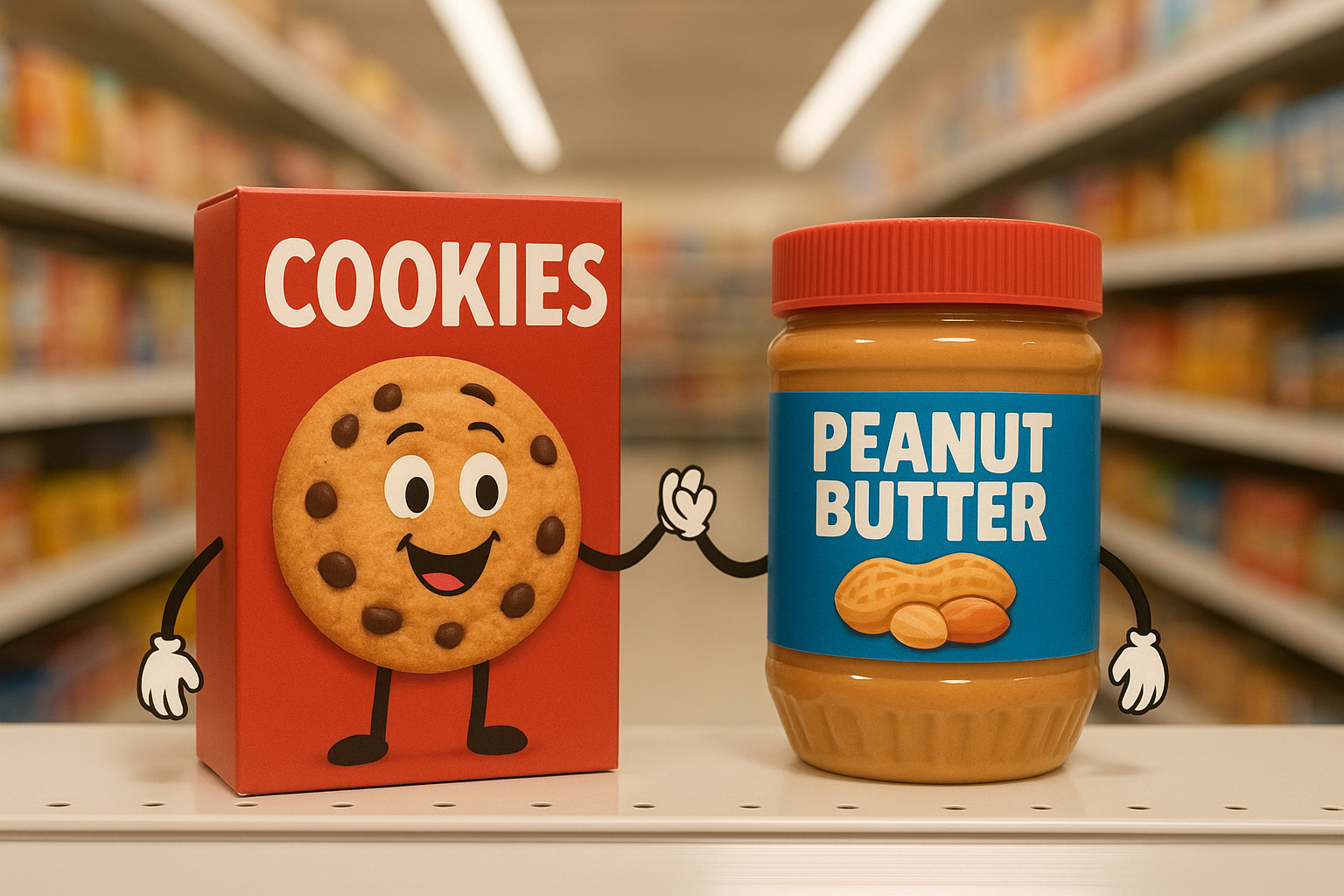
Created by ChatGPT
Walk through any grocery aisle in Canada today and you might notice something remarkable. Shoppers are no longer as brand loyal as they once were. They’re switching, sampling, and seeking out whatever delivers the best value or fits their needs in the moment. According to a Grocery Business survey, nine in 10 Canadians actively look for discounts, and three-quarters make purchase decisions based primarily on price rather than brand. This shift in mindset makes it all the more important for brands to get outside of their own aisle and show up in new ways and new places.
Despite the expanding scale of the Canadian CPG industry, the growth rate for individual brands is slowing. Canadian Grocer reports that top-line growth for leading CPG companies has dropped from more than 5% a decade ago to just about 2% today. And EY’s “State of Consumer Products Report 2025” finds that 71% of CPG executives globally believe collaboration across ecosystems — including partnerships with other brands — will define growth in the next three years.
The opportunity delivered through partnerships is evident: shared data and cross-category activation are a powerful combination in marketing that can produce high-impact, low-investment strategies for unlocking relevance in a marketplace where loyalty is no longer guaranteed. In short, growth is now a team sport. Whether it’s soup and bread, coffee and cereal, or chocolate and popcorn, pairing complementary brands around a shared consumer or shopper occasion can expand reach, strengthen shopper engagement and drive incremental sales.
The Data Behind the Opportunity
Despite their focus on price, Canadian shoppers are still signaling openness to experimentation. A recent Nielsen report (Finding Harmony on the Shelf) indicates that 57% of Canadians say the brand name is irrelevant if the product meets their needs, while 42% are buying more private label than ever. Even more striking, 56% say they trust store brands because they’re endorsed by the retailer.
This erosion of traditional brand hierarchy opens the door for creative collaboration. When consumers care more about meeting their needs than following logos, they become more receptive to dual-brand storytelling. Partnerships can leverage this behaviour by combining audiences, elevating brand equity, and introducing products through shared moments of consumption.
EY’s State of Consumer Products 2025 reinforces this view, outlining how companies that engage in partnership-driven campaigns outperform competitors in both speed of innovation and consumer relevance. In an environment where Canadians are actively trading down or switching brands, collaboration offers a way to trade sideways and reach new consumers through adjacent categories rather than losing them to price.
How to Effectively Collaborate
Choose the right partner. The foundational element is finding a complementary brand. The most effective collaborations happen between brands that share a target consumer or usage occasion but solve different needs. For example, a healthy snack brand might collaborate with a fitness beverage brand to capture post-workout moments, or a bakery could partner with a coffee company to own the morning ritual. Meeting consumers where they are by finding the natural alignment will be a key driver for easy adoption.
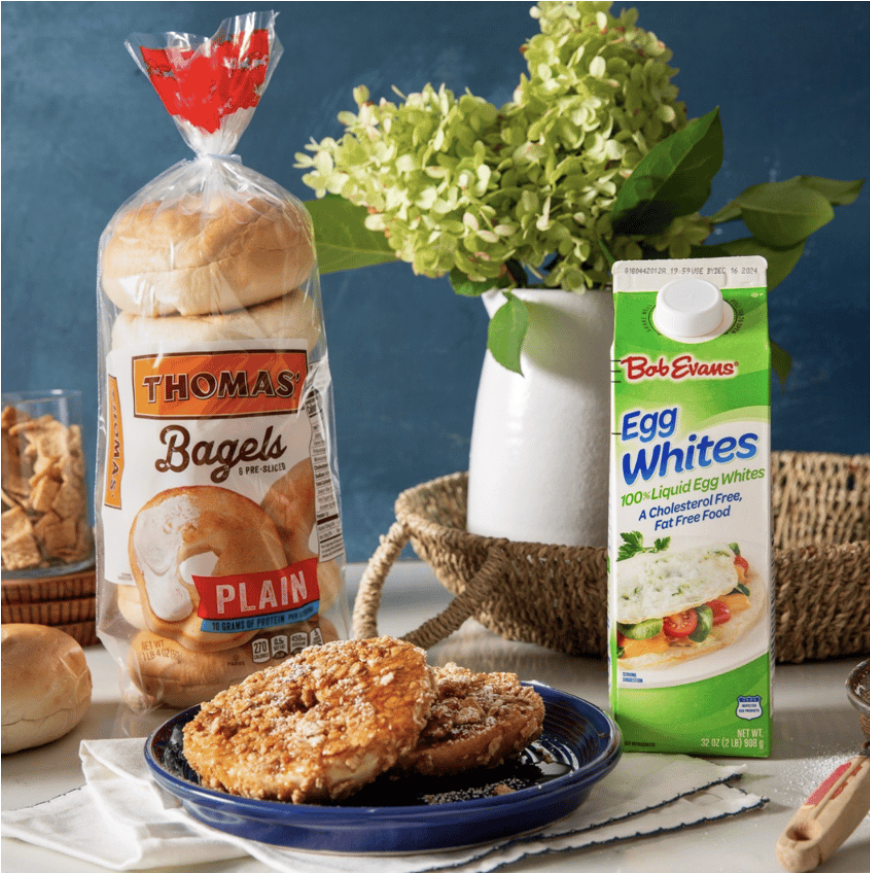
Co-invest in creativity and media. Partnerships allow brands to stretch budgets further. Co-developed creative assets, shared online content, broader media campaigns and multi-brand in-store activations can double visibility while splitting the costs. In addition to increasing reach, partnerships can expect to benefit from shared insights and then lean on one another to collaborate on further innovation.
Map the shopper occasion. Identifying the overlap between existing shoppers, or the gap that fills an identified need for shoppers, are necessary considerations when looking at a potential partner. Understanding when and where consumers interact with the product categories — think movie night, lunch prep, or cultural celebrations — helps determine how the partnership can add value by finding ways of personalizing the experience and speak to shoppers in new ways that showcase a pairing they may not have considered otherwise. (Click here to learn more about personalization and key strategies for maximizing your retail media plans.)
Effective partnerships can deliver the following benefits:
- New audience reach: Each brand introduces the other to its loyal shopper base, increasing penetration.
- Marketing efficiency: Shared creative and media investments can deliver a stronger ROI, along with consistent messaging.
- Category expansion: By joining forces, brands can reposition themselves within broader consumption moments and spark new product correlations.
- Broader exposure: Collaborations generate buzz and revitalize consumer perception. One successful partnership could permit a lifelong shift in the way that consumers think about the brands or product.
- Build basket sizes and support retailers: While the obvious incremental value of partnerships is derived by the brands, there can be a significant halo effect for retailers as well. Effective partnerships can not only increase basket size by adding items that weren’t on the shopping list but also add excitement to the in-store experience.
In Canada’s evolving retail landscape, where 90% of consumers are hunting for value and loyalty is increasingly fluid, collaboration offers a new path forward, allowing non-competitive brands to combine resources, expand reach, and tell stories that resonate across aisles and occasions.
“Collaboration across ecosystems is not optional — it is the growth engine of the future,” concludes EY’s report. For brand leaders ready to adapt, the question is not whether to partner but how to do it strategically. The ones that choose to collaborate today may well define the marketplace of tomorrow.
Continue the learning on valuable partnerships with recent insights on retailer collaboration here. For more information about effective media strategies, check out the fall 2025 Retail Media Report Card Canada.
About the Author

Nicole Staffiere is Senior Account Executive at Mars United Commerce based in Toronto, where she specializes in powering brands forward for CPG clients. Her daily goal is to provide exceptional client service and deliver impactful, results-driven strategic campaigns.