
As retail media networks continue moving into physical retail, commerce marketers should develop creative strategies tailored to specific shoppers and environments.
The critical role that creative plays in driving shopper engagement and conversion is often overlooked in a commerce marketplace that’s been driven by digital advertising practices that place a far heavier emphasis on ad positioning than messaging.
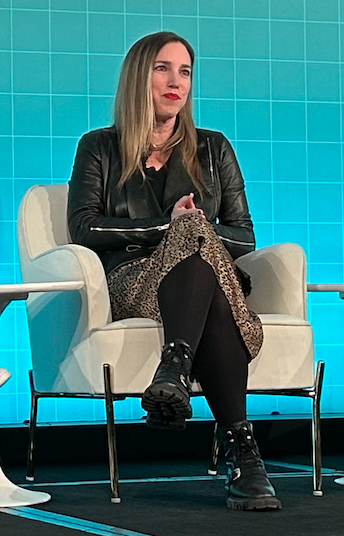
With retail media now moving into the physical store, commerce practitioners need to address this oversight and develop creative strategies that are informed by customer data, tailored to the specific retail environment, and ultimately able to deliver identity-driven, personalized content, according to a panel of executives at this week’s NRF “Big Show” in New York that featured Mars United President Amy Andrews.
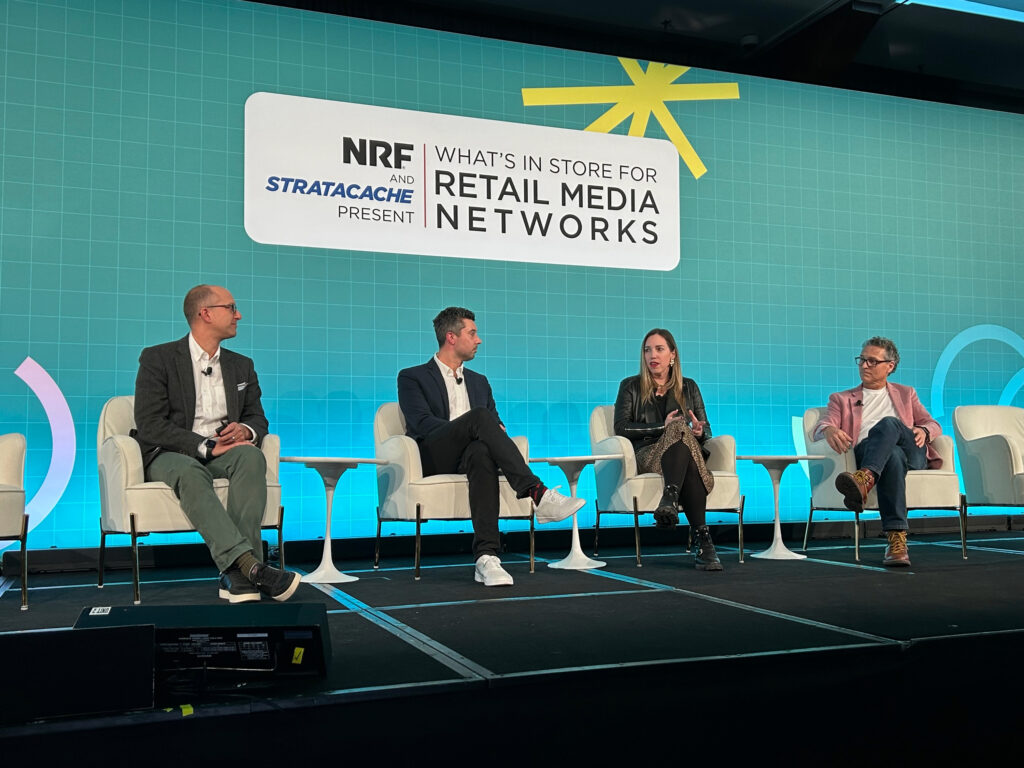
One clear way of identifying a media professional new to the retail space is hearing them assume “that their creative is going to be a CTV ad sitting on a big-screen TV in the store,” said consultant, podcaster, and panel host Tom Limongello. But the reality is that the store is a wholly unique channel that demands special treatment.
In convenience stores, “the job of the creative is to close the sale. We call it ‘conversion creative,’” explained Mario Mijares, Vice President of Marketing, Loyalty, and Monetization Platforms at 7-Eleven. In the impulse purchase-heavy c-store environment, the most effective in-store audio ads running on 7-Eleven’s Gulp Media Network are very short messages that dispense with brand storytelling and go straight to a product offer, said Mijares. That’s what makes Gulp an ideal partner for helping drive trial of new products or brand extensions, he suggested.
“You have to think about the right creative for the environment,” and short-form, deal-focused messaging “makes a ton of sense in a small-format store where we’re talking about a lot of impulse brands,” Andrews agreed. “But as we look at different shoppers and different environments, there are different creative messages that are going to resonate.”
What I’m really excited about is not just how we’ll start to tailor the creative for different shoppers in different stores, but how we’ll get much more personalized and relevant at an identity level, so that ultimately we can deliver different radio ads at 7-Eleven at different times of the day — or maybe even ads triggered by specific shoppers entering the store.”
Other retail channels and store environments are suitable for brand storytelling and loyalty building. Ace Hardware is working to develop in-store media opportunities that will fit into the “hyper-local environments” operated by the 2,800 members of its retailer co-op and also provide easy-to-find solutions for the common home-improvement projects of its shoppers, according to Tyler Lusenbrink, Head of Sales for Ace’s RedVest Media Network.
Retail media can’t operate in a vacuum, however. Networks and brands need to make sure they’re “not just thinking about the physical environment … but how we win at every shelf,” said Andrews. RedVest’s project-focused campaigns begin online and then carry through to stores (where static signage is still often used, by the way). 7-Eleven is even structured for this holistic approach: shopper marketing and retail media are handled by the same team “because that’s all going into the store,” said Mijares.
“What is that total solution for the shopper? [If] we put that lens on it, there’s so much connectivity we can drive” across all shopper touchpoints, Andrews said.
While the necessary tools might be available just yet, audience targeting will be vital to in-store success. “With all the data that we have now … we’re at a real turning point. Before, we might have said, ‘We have our primary target and our secondary target,’” explained Andrews. “Now, we can have 37 different audiences, and we have the ability to create different creative messages that will resonate with [each of one] across 17 different touchpoints. With some of the AI capabilities that we have, driving that scale is more realistic and profitable now.”
“I love the idea of cranking out more creative — but absolutely in a way that is strategic, meaningful, and relevant,” said Andrews. “The word that came up a lot at CES [which she attended several days before NRF] was intimate. You can be a lot more intimate with shoppers today, because we have the ability not just to deliver a million messages, but to do it in a strategic and thoughtful way — [and then] test and optimize mid-campaign more than ever before. If we’re creating more, we can be learning more, and that starts with really, really sound targeting.”
Note: The panel discussion was held during “What’s in Store for Retail Media Networks,” a one-day conference hosted by digital signage leader Stratacache in conjunction with NRF. On April 15, Stratacache will join with IAB (Interactive Advertising Bureau) to host “What’s In Store for Retail Media Networks: Measuring the Store.”
Need more guidance on developing best-in-class in-store creative strategies? Mars United Chief Creative Officer Steve DeVore outlines key considerations for commerce marketers in this thought-provoking white paper.