
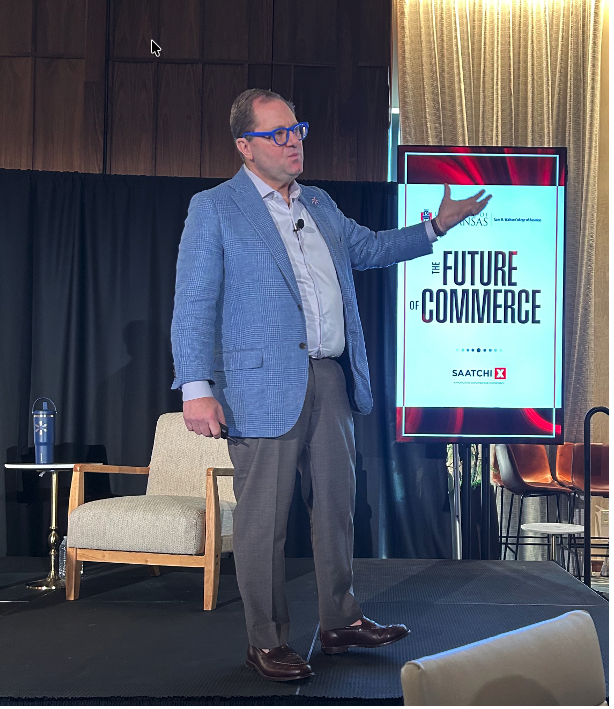
Victoria Van Dusen, SVP-Retail Consultancy, reports back from the “Future of Commerce Summit,” a unique conference held last week in Bentonville. The event was hosted by the University of Arkansas’ Sam M. Walton College of Business and sponsored by Mars United’s Publicis Commerce colleagues at Saatchi X.
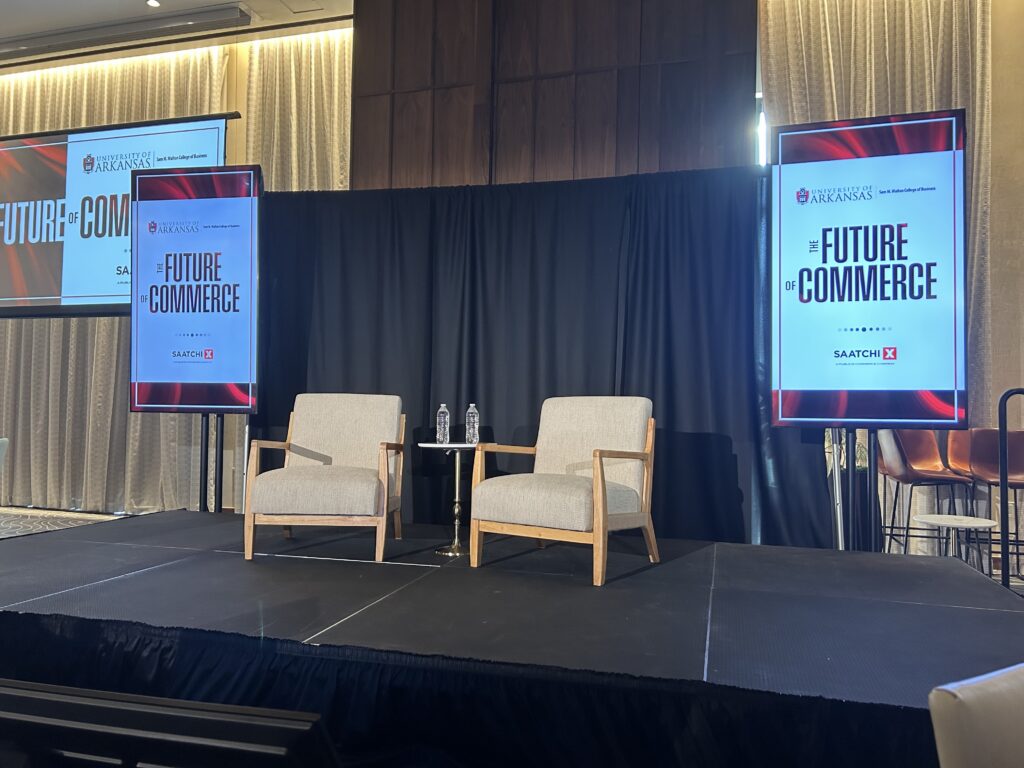
After hearing from a lineup of speakers hailing from the worlds of retail (Walmart), commerce marketing (Publicis Groupe), technology (Google), and academia (Walton College professors and students), Victoria came away with three critical considerations for brands.
1. Trust:
Listening to a panel of Walton College students discussing their shopping habits, there was a loud and clear dichotomy that we’ve seen before in our work with clients. Gen Z wants personalization, but they’re concerned about privacy. They can spot content that’s been AI-generated and they don’t trust paid advertising — but they will completely buy into recommendations from influencers they’re following because they already trust that relationship.
Brands therefore must try much harder to build their own trusting relationships, and that’s going to require long-term strategic thinking not just short-term campaign planning. They need to try different content and different experiences to build authentic, personal connections. Walmart’s Seth Dallaire talked about the need to “meet customers where their expectations are” while also “living in the future” to anticipate potential shifts in those expectations.
2. Agentic Readiness:
Based on all the talk about AI agents, it’s really important for brands to rethink their strategy toward product detail pages. It’s been “set it and forget it” for too long. PDPs now need to include seasonally relevant content, and they must have specific use cases. Consumers get far more specific with their AI prompts, so agents are looking for a deeper level of detail and differentiation — did you know that sunscreen in Hawaii has strict ingredient regulations? How many PDPs address something like that?
The days of general product benefits are behind us. Brands now need to understand these detailed prompts and develop the relevant content needed to show up in agent recommendations. (Google’s Anish Gupta discussed a few tools his company his company has rolled out to help do that.) They need a strategy for continuously updating their PDPs.
3. Experimentation:
The speed of retail has accelerated so much. With the economy and other pressures that we’re facing, proven performance is critically important right now. But if you’re only worried about today, you won’t learn what you’ll need to be successful tomorrow. As my Publicis Commerce colleague Jason Goldberg recommended, you don’t need to be a first mover, but you should be a fast follower.
Brands that are willing to test and learn, and be OK if some things fail, are going to win. It’s that often-discussed strategy of putting 80% of the base budget into tried-and-true tactic but devoting 20% to testing. I think brands that are playing it safe are getting lost and eventually will get left behind.
About the Author

Victoria Van Dusen is SVP-Retail Consultancy at Mars United, where she oversees all client activity at Walmart and club stores while managing the Bentonville, Arkansas, office. Her more than 20 years of commerce marketing experience supporting major retailers and CPG brands includes 16+ years within the Walmart ecosystem.