
In-vehicle technology could soon give brands and retailers opportunities to literally drive conversion.
By Michele Roney, Mars United Commerce
I flew to Las Vegas for CES last month from Detroit. I racked up a lot of steps walking the show and getting around town. But the big takeaway for me involved driving — specifically interactive in-car communication tools that could provide a logical “on the go” addition to retail media networks looking to cover every mile of the path to purchase.
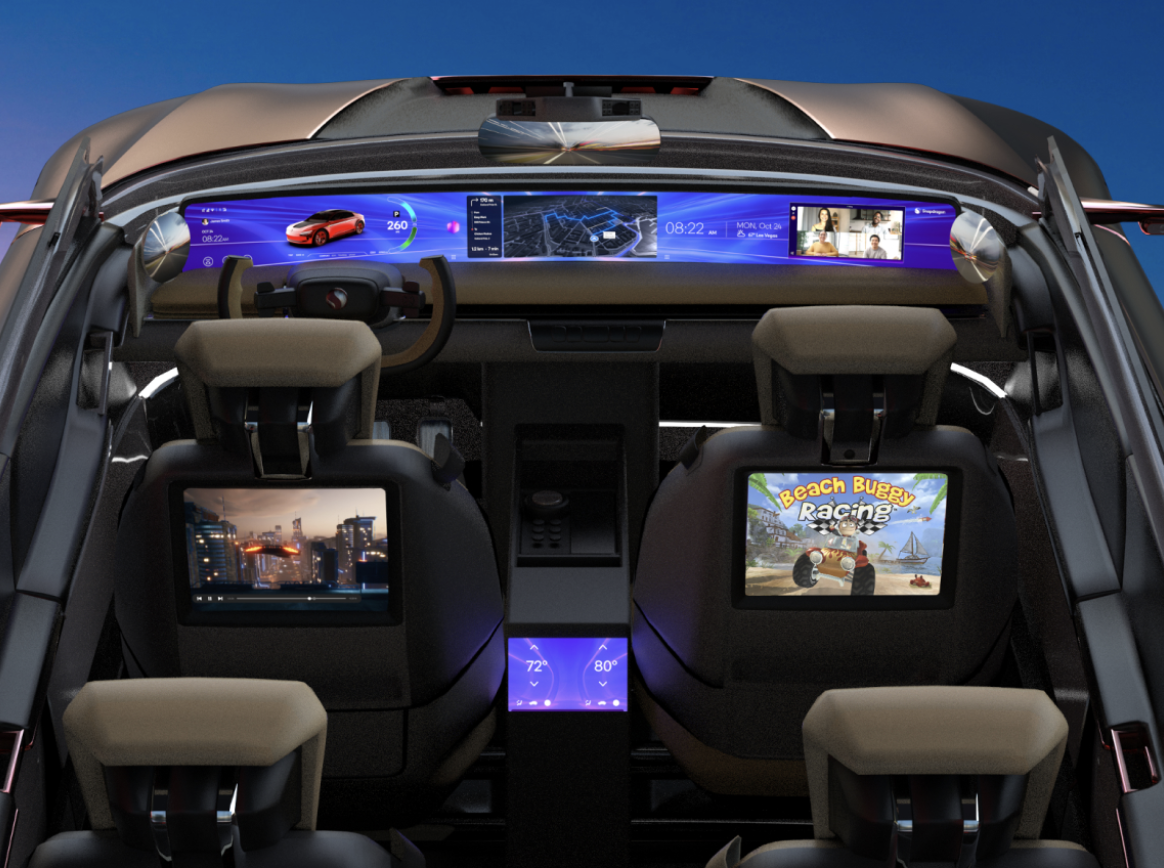
Source: Qualcomm
What became clear at the show is that the next generation of connected vehicles is reshaping the mobile experience. Autonomous driving is getting most of the attention, understandably. But there is a wave of new technology that will keep cars continuously online, contextually aware, and able to adapt in real time to anything they encounter. Here are just a few examples:
- Qualcomm has new computing architecture that, with help from partners like Google’s Gemini AI agent, is able to contact emergency responders if the driver passes out — and even send their vital signs if a monitor is present. Oh, but it can also select a nice restaurant and make dinner reservations.
- China-based car maker Geely Holding (which owns Volvo, Lotus, and other brands) plans to install a voice-controlled agentic AI platform from Cerence AI in its cars that will connect navigation, climate control, and media — and also help the driver get some work done by integrating with Microsoft 365.
- Germany-based “driver interaction platform” 4screen has technology that taps into real-time data to help drivers find nearby services like gas stations, charging stations, and convenience stores — and potentially product offers from retailers and brands — through the vehicle’s existing digital screen. The company already has an agreement with Stellantis to integrate the tool into some of its auto brands in North America and Europe.
From sight to sound, these interactive platforms can connect advertisers directly to on-the-go consumers, closing the gap between digital and physical retail. For innovative retail media networks, they create a powerful opportunity to help brand partners target — and almost literally drive — shoppers to make a purchase.
They could prove especially effective for retailers and brands that thrive on impulse behavior or solve urgent, everyday needs, where proximity, timing, and in-the-moment relevance directly influence conversion.
Let’s not forget that Uber already does this: The ride-hailing leader was at CES, helping to showcase electronic vehicles from Lucid Gravity that will be prototyped in the San Francisco area later this year and could ultimately be introduced worldwide.
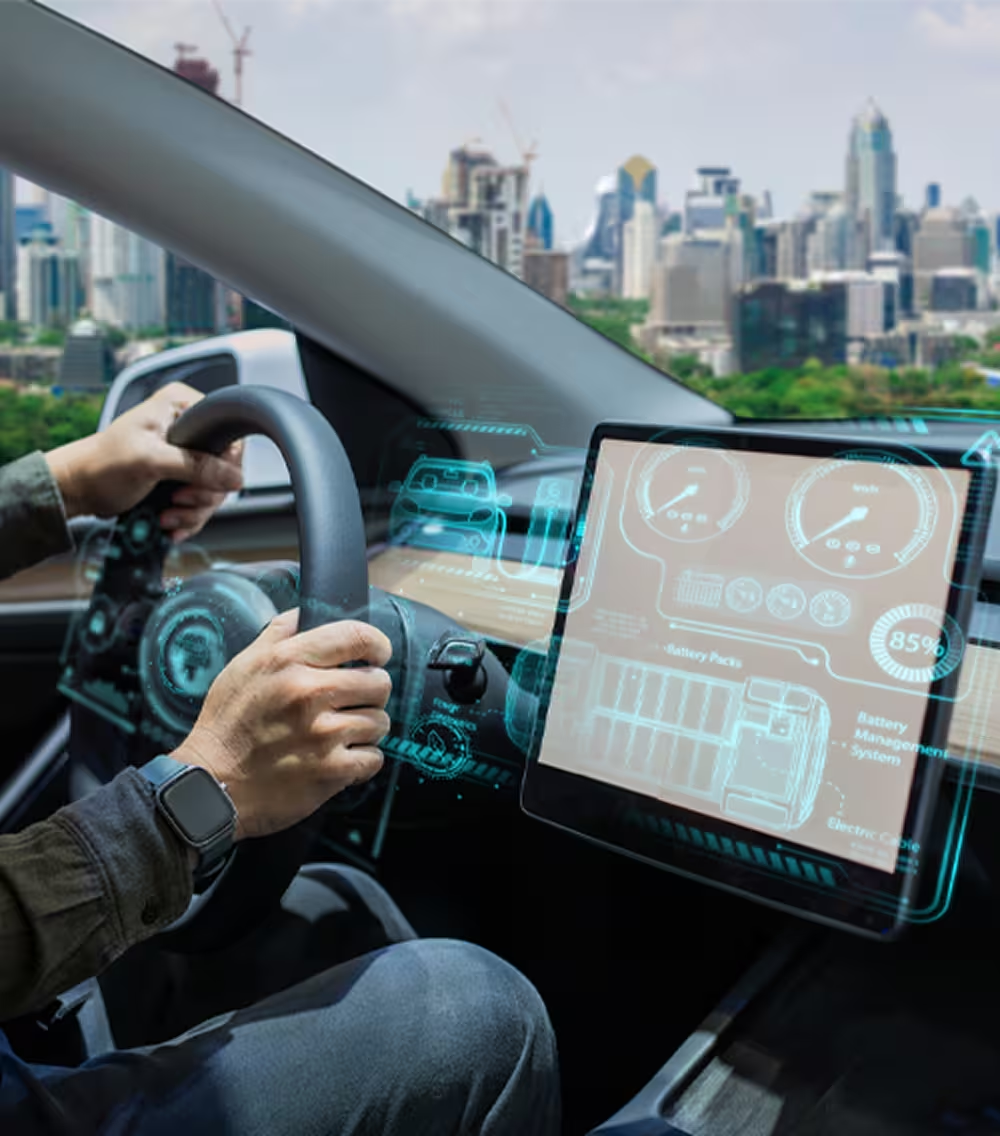
Source: Cerence AI
Journey Ads within Uber’s app let advertisers use display and video ad formats to “take over your consumer’s experience” from ride request to drop-off, the company says. And newer in-car “JourneyTV” tablets showcase “premium brand moments” at the beginning of each ride.
In-vehicle entertainment operators like SiriusXM and navigation tools such as Google’s Waze app are already in the ad game. And some automakers such as BMW and Mercedes-Benz already support in-vehicle payments for fuel, parking, and EV charging directly from the car’s dashboard, according to Boston Consulting Group. So why not road-trip snacks from 7-Eleven, too?
Location-based marketing has been around for nearly as long as mobile phones, of course. What could make these new in-car opportunities more effective is the rider-specific data they can provide to take personalization well beyond proximity to a store. In a 2025 article in The Drum examining “robotaxis” and other driver-less vehicles, an un-named agency executive labeled the concept of in-vehicle advertising “DOOH with a CRM system.”
But even before we’re all sitting back and letting our cars do the driving, there are opportunities to explore. Retail media advertising is already working to get shoppers out of their homes and into stores, and it’s already working inside stores to influence their decisions. There’s no reason why it can’t try to catch them in between, too.
About the Author

As EVP at Mars United Commerce, Michele Roney leads the Retailer CX business, which helps retailers drive growth through marketing, customer experience design, and the creation, operationalization, and monetization of retail media networks. A 35-year company veteran with experience across retail marketing, media and promotion, she has led the ground-up development, management, and support of leading retail media networks both in the U.S. and Canada.