
Six key themes from retail’s annual blockbuster event, where agentic commerce and other forms of AI activation basically stole the show.
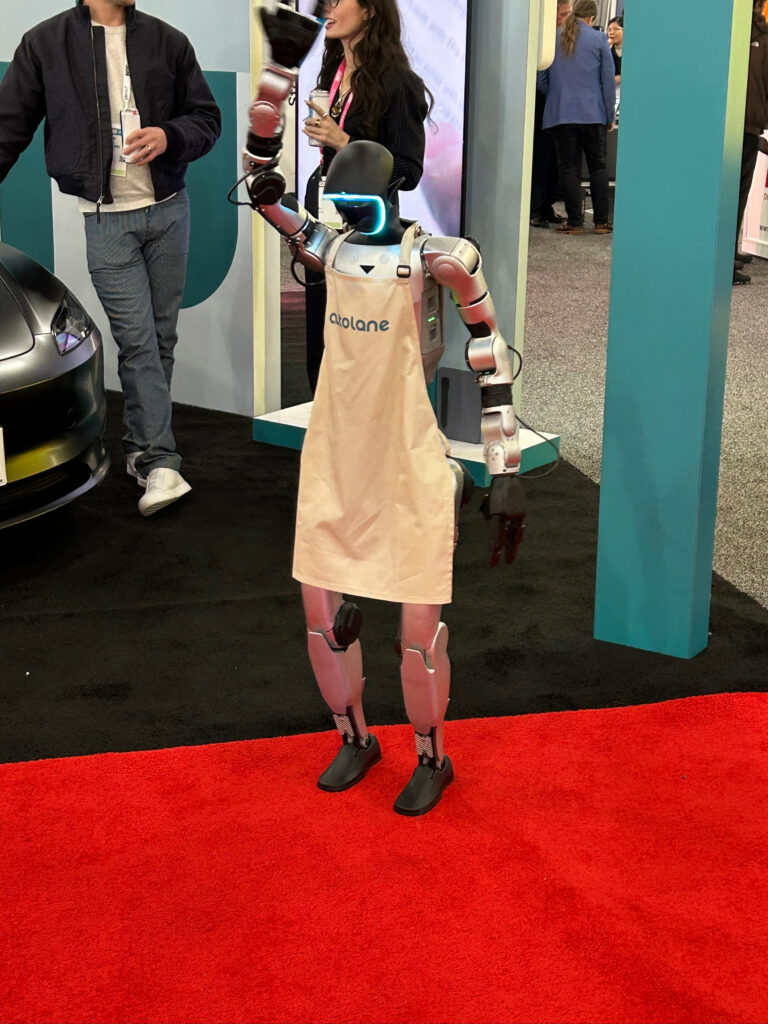
“If you haven’t noticed, every single exhibitor at NRF is an AI company.”
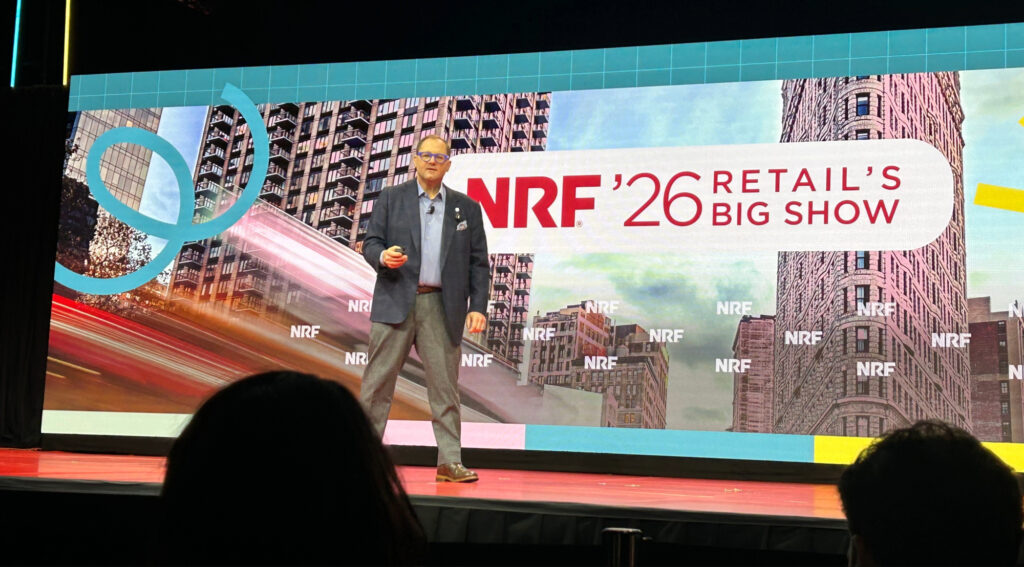
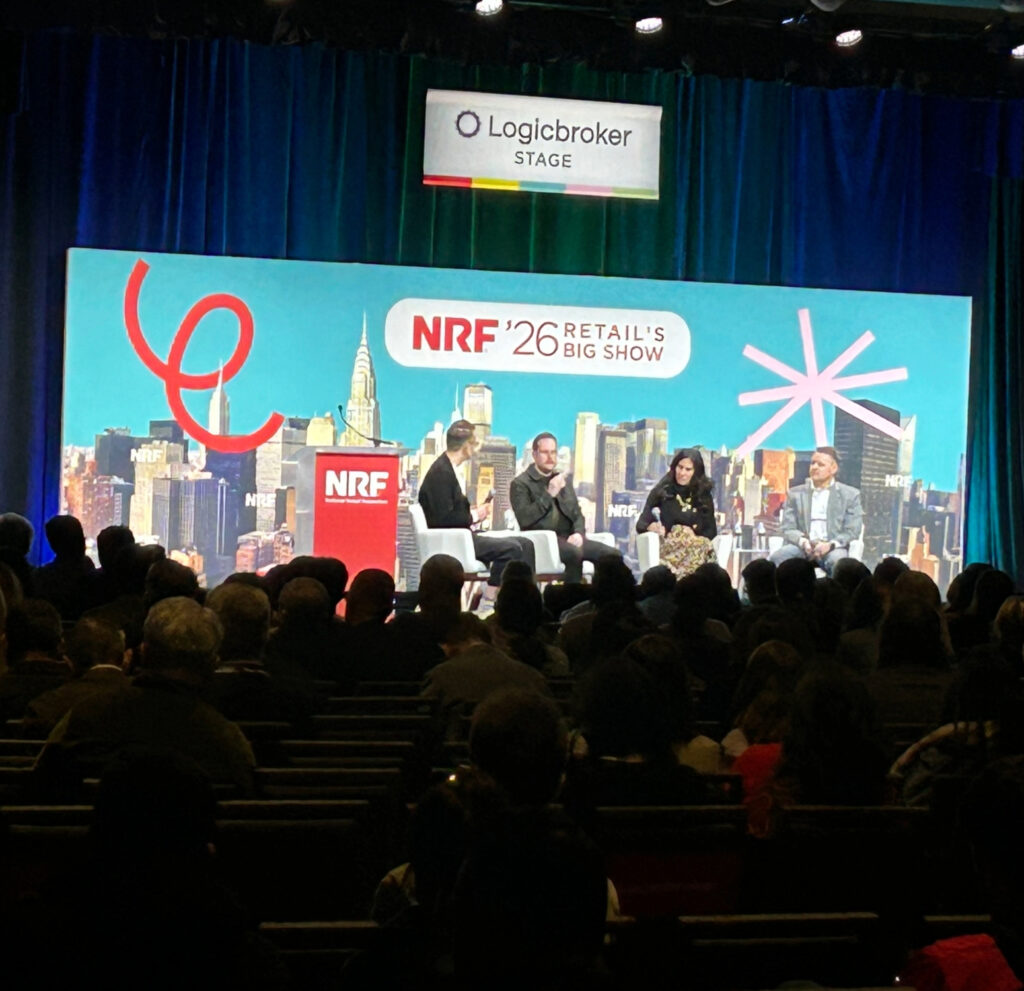
Publicis Groupe Chief Commerce Strategy Officer Jason Goldberg wasn’t exaggerating too much when he made that comment during his closing keynote at NRF ’26 earlier this month. In fact, he wasn’t the only speaker at this year’s event to make that tongue-in-cheek observation.
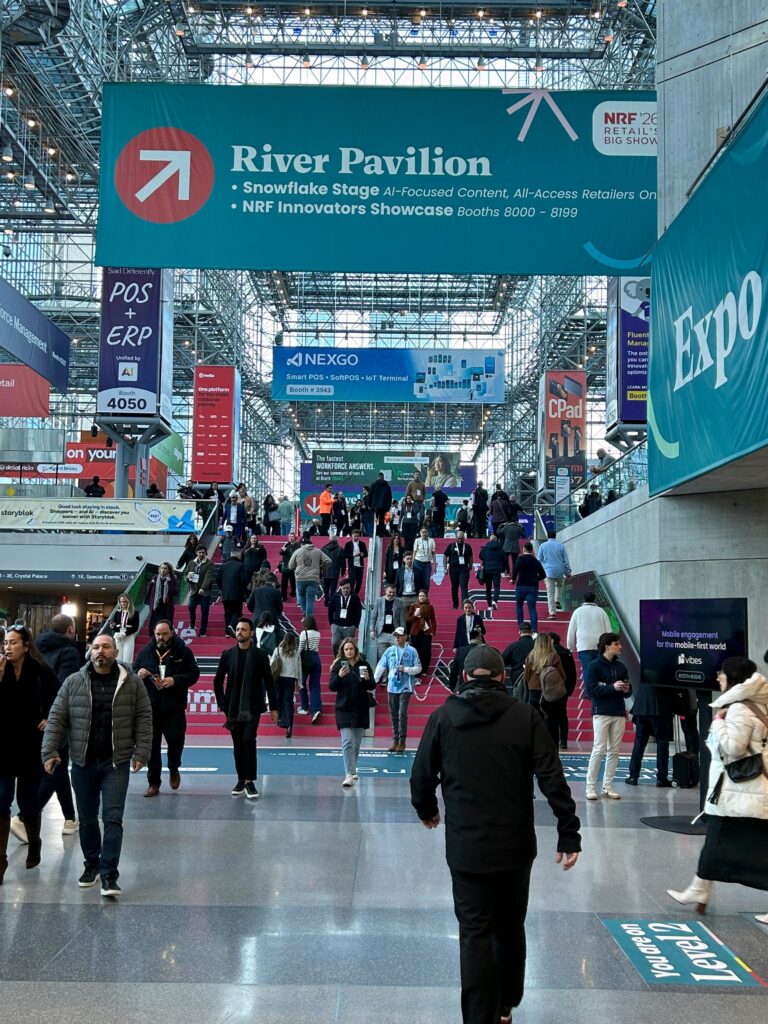
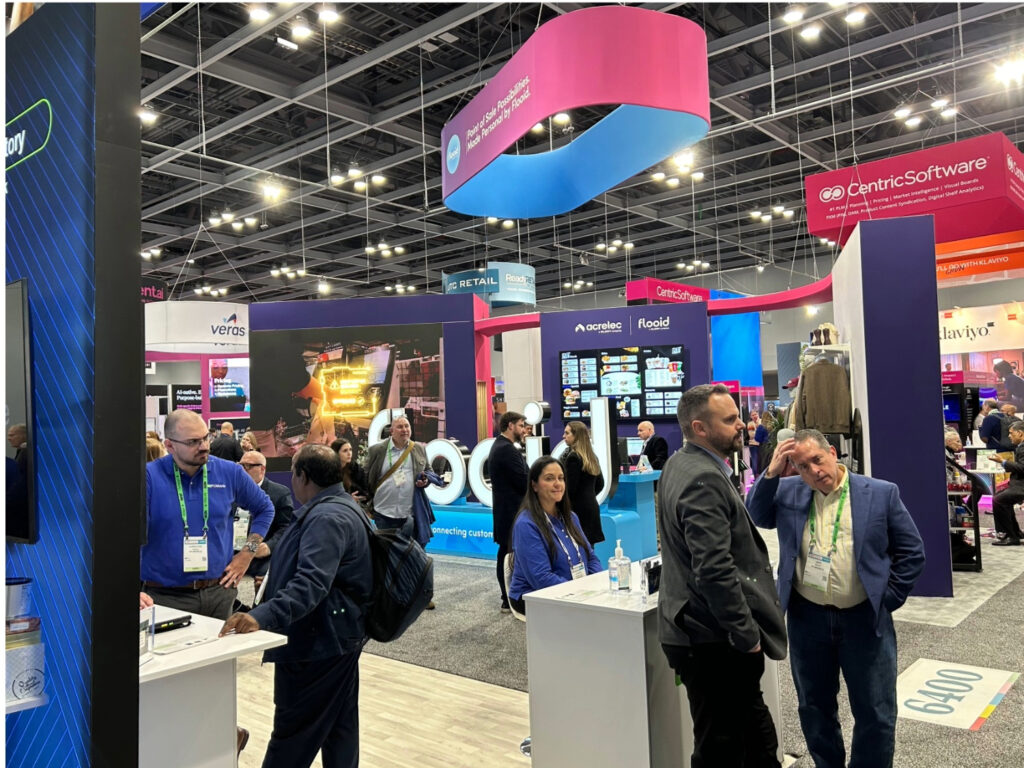
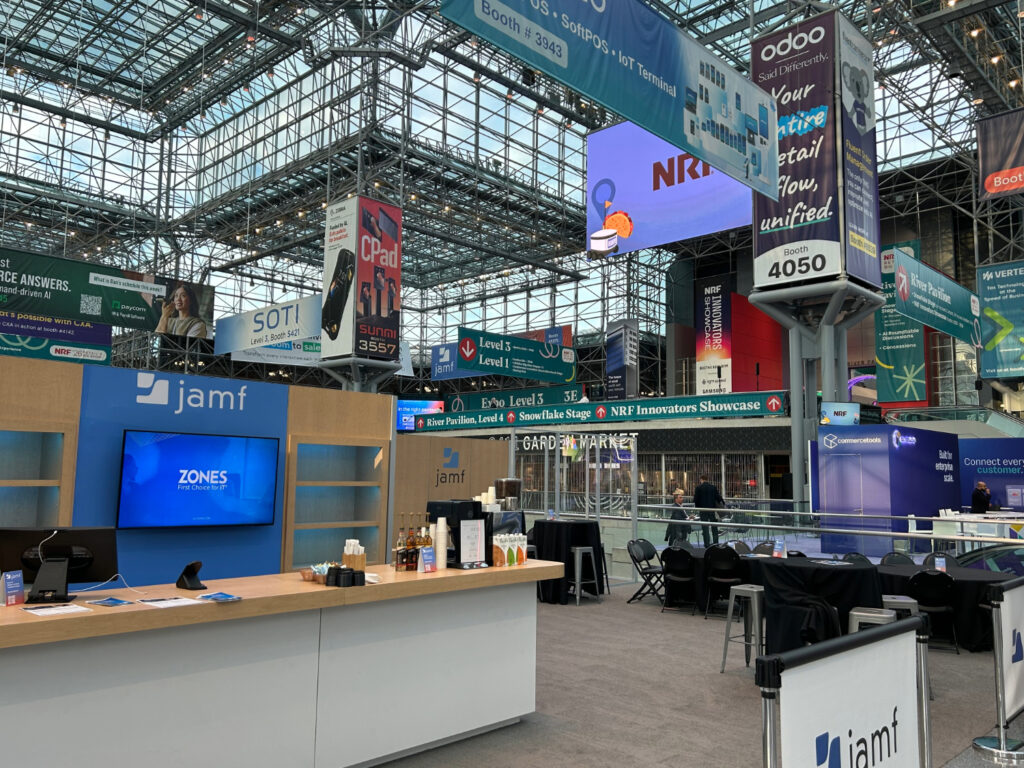
Clearly not all of the 1,000-odd exhibitors at “Retail’s Big Show” in New York were specialists in artificial intelligence. And not every speaker on the event’s lengthy conference agenda focused on AI as a topic. But it certainly seemed that way for many of the roughly 40,000 retail practitioners in attendance.
No, global retailing as seen through the lens of NRF ’26 did not completely revolve around AI: the topic of reverse logistics earned its own distinct companion event this year. And in-store retail media again had its own one-day side conference, sponsored by digital signage specialist Stratacache. But AI was pervasive throughout those discussions as well.
And we all know why: because “it’s a tool that can impact almost anything,” as Goldberg noted in his keynote. “There are lots of improvements to supply chain, staffing, order management, and product merchandising that AI efficiencies can dramatically help.”
Naturally, the AI activation creating the greatest amount of buzz was agentic search, thanks in large part to an earth-shattering announcement from Google on the show’s first day, and then follow-up news from Apple that was only slightly less ground-shaking.
Google unveiled an open-standard Universal Commerce Protocol that can work across individual agents to assist the complete shopper journey, naming Walmart, Target, Shopify, Etsy, and other retail and ecommerce leaders as co-developers. Apple then unveiled that it will adopt a customized version of Google’s Gemini agentic platform to fuel its consumer technology.
“Think about what that means. Agentic commerce is not, ‘Hey, Google, order a new ingredient for my kid’s lunch.’ Agentic commerce is, ‘Hey, Siri, never let me run out of ingredients for my kid’s lunch again,’” Goldberg said.
Here are six key themes from this year’s event — all of which are now “powered by” AI to some degree.
1. The Agents Have Arrived
Extrapolated traffic data from July 2025 had already positioned ChatGPT as the 11th largest U.S. ecommerce site — and since then the agentic search engine has grown exponentially and added actual ecommerce functionality. (Note: news of paid advertising didn’t break until a week after the show.) Shopify merchants have experienced a 14x increase in orders from agentic platforms in the last year, according to Harley Finkelstein, the ecommerce platform’s president.
“This isn’t the future. This is already happening,” said Goldberg in his keynote, as he explored the rapid pace of change occurring in agentic commerce.
Industry, technology, and cultural conditions are ripe for this retail transformation, explained Kiri Masters, industry analyst with the Retail Media Breakfast Club, who compared it to the landmark shift from store clerk order fulfillment to customer self-service in the early 20th century (at a Piggly Wiggly grocery store in Memphis, for retail trivia fans out there). Agentic commerce can similarly be viewed as a move to “cognitive self-service,” she suggested.
And now Google’s Universal Commerce Protocol could be poised to align what — from the consumer’s perspective — seemed to be heading toward a fragmented, agentic platform free-for-all. “It’s literally the flip of a switch and we’ll be connected to all of them,” marveled Ben Francis, CEO & Founder of Gymshark.
Retailers need to develop strategies that will let them “remain the locus” of consumer transactions, advised Leora Kelman, Managing Director and Partner at Boston Consulting Group. Evidence of that has been recent moves made by marketplace leaders such as Walmart and Target to forge partnerships, first with ChatGPT and now Google.
And the prospect of automated shopping that eliminates human consideration entirely is certainly a concern for any brand or retailer. “We’re going to learn all about brand loyalty as we enter the era of AI,” which will require consumers to actively tell their agent of choice to select their favorite brands, said VaynerMedia CEO Gary Vaynerchuk.
In general, though, agentic commerce might not be the bogeyman that retailers fear, according to several speakers. The allure of retail media might diminish as networks loses some of their first-party data advantage and retailers move farther away from customers, “but if agentic really takes off there is a big upside to the core retail business,” suggested Collin Colburn, VP-Commerce and Retail Media for IAB.
Agentic search users “might never actually come to a Lowe’s,” said Joe Cano, the retailer’s SVP-Digital Commerce, noting that 8% to 9% of ChatGPT searches are related to home improvement. “You have to meet [consumers] where they are. We want to make sure we’re relevant and show up in the right way.”
To prepare for a marketplace where purchase decisions are made by shopping agents that intimately understand the consumer’s needs — and may never even consult retailer or brand websites — the most important initiative for commerce companies will be organizational change management.
“The technology is important. The strategy is important. [But] we have to think about how we’re going to take all those human beings in our organization and get them comfortable with this disruption,” Goldberg advised.
2. AI is an Enterprise-Wide Enabler
Agentic commerce gained most of the “future of retail” attention, but speakers outlined a wide range of use cases for AI as a driver of efficiency and effectiveness across all retailer operations. “If you want to make money today with AI, that’s probably where you should look,” said Goldberg.
In one prime example, an internal AI agent is helping Sam’s Club optimize product assortment at the store level by analyzing sales trends across the chain — and then tapping into outside data sources to identify potential new additions to the planogram, explained Chief Merchandising Officer Julie Barber. These capabilities free up the merchants to “focus on the strategy, the supplier relationships, the product quality — and it’s fantastic,” she said. And they are especially critical as merchandising continues moving from an annual cycle of chain-wide decision-making to store-level assortments determined in near-real-time.
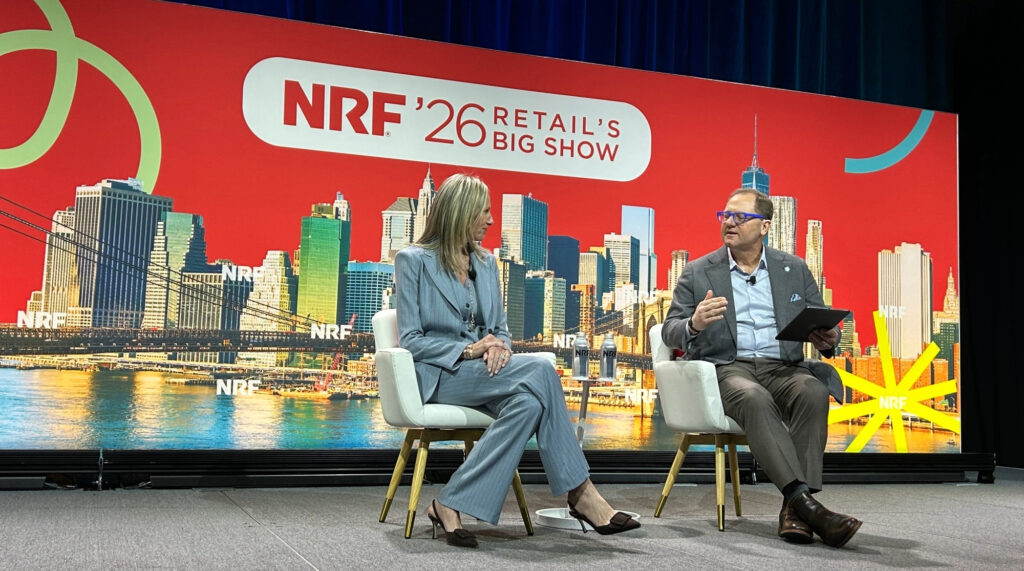
“We’re able to do some things that we weren’t able to do in the past, to be a little bolder, because we’re more agile and we can change” more easily, Barber said. AI is also helping “get as accurate as possible” with order volume, an outcome that ultimately lets Sam’s Club reduce prices for members. “And that’s the ultimate goal.”
3. Retail Media is Coming of Age
It’s been a minute since retail media wasn’t the predominant topic at a commerce event. Rest assured, it was still a pervasive theme as practitioners discussed expanding audience reach through the physical store, measuring success through metrics that prove real business impact, and building shopper-first strategies that will deliver better, more sustainable results for retailers and advertisers.
If those needs are addressed, in-store activation might not just add a critical third leg to the retail media stool but give networks an unassailable advantage against any and all competing media platforms.
Moving into the Store: Despite the fact that more than 80% of product purchases still take place in physical locations, less than 1% of retail media ad spending is devoted to the channel — which won’t break $1 billion in outlays until 2029, according to eMARKETER. Stratacache is more bullish, pegging the overall advertising opportunity at $20 billion, according to CEO Chris Riegel.
In addition to providing access to the vast majority of purchases, a greater focus on in-store could be retail media’s best bet for long-term viability. For one, in-store is the only channel where Amazon can’t gobble up most of the ad spending, noted several speakers. That’s important because Amazon will “easily” continue capturing as much as 75% of the overall U.S. market through the end of the decade, predicted Sarah Marzano, Principal Analyst at eMARKETER.
In addition, Wall Street views the store as a “durable asset” compared with other forms of media, according to Mark Boidman, Partner and Head of Media & Entertainment at Solomon Partners. “In my opinion … someday all ads will be blocked on your mobile phone,” he said.
What’s more, as consumers move to agentic search platforms, traffic on retailer websites — and therefore ad value — could decline, and the first-party data advantage networks bring to offsite media could also diminish. That leaves in-store as “the most resilient aspect of retail media,” suggested Masters.
Measuring real impact: Commerce marketers aren’t doubting the effectiveness of in-store retail media. But they are demanding evidence.
According to eMARKETER, 60% of retail media advertisers now identify brand awareness as their primary objective, with sales lift trailing at 56%. In the store, they’re looking for real-time audience measurement and consistent SKU-level sales attribution — and they won’t scale their spending without them, warned Marzano.
Mars, Inc. wants to see “change in shopper behavior” such as new-to-brand buyers and growth in basket size, said Meera Patel, the CPG’s Senior Director, Global Omnichannel Advanced Analytics. “Our brands and merchants basically want the same thing,” which is new buyer/category penetration, agreed Mark Williamson, AVP Retail Media at Costco.
Standards for in-store impressions, to facilitate comparisons with digital media, are needed “but also what impact the impression has,” emphasized Liz Roche, VP of Media and Measurement at Albertsons Media Collective. As Albertsons expands its digital screen pilot to hundreds of stores in 2026, the retailer is working to make measurement “a reliable component” that delivers “repeatable results and not just a grab bag of various lifts,” said Roche.
“I think the ‘why’ is probably the most important thing, because it enables [advertisers] to do better decision making,” said Jeffrey Bustos, SVP-Retail Media Analytics at Merkle.
Improving the shopping experience: A newly released study from Babson College Professor of Marketing Dhruv Grewal finds that digital signage drives an average overall sales lift of 8.1% but increases substantially in specific cases such as new products (24.7%), popular brands (16.7%), and impulse buys (15.1%). The average lift is also higher later in the day and on weekends, according to Grewal.
Meanwhile, 60% of shoppers have told eMARKETER that in-store media has influenced purchases. And CVS has found that 50% of its shoppers compare products at the shelf even when they come to the store with a specific purchase in mind, noted Sarah Reynolds, Senior Director of Retail Experience Strategy.
But while Grewal suggested that a digital sign every 10 feet wouldn’t be overly intrusive for shoppers, nearly all retailers and brands at NRF asserted the need to focus on the shopper experience when building out retail media opportunities.
Brands and retailers must “always put the consumer at the center of everything we do,” said Arthur Sylvestre, VP Digital Commerce for Danone North America. “It’s very stupid not to do it this way.”
“It’s ‘retail’ all caps, ‘media’ all lower case,” said Williamson at Costco. “[The store] is where the magic happens. Disrupting that is non-negotiable.”
Costco takes a “merchant-first mentality” because “the objective of the media is to sell merchandise,” said Williamson. “If you chase after profitable media revenue, you might diminish member value [and] at some point, the whole thing is going to fall apart.”
“We always want to go back to what we’re known for, our secret sauce, [which is] exploration,” said Aaron Dunford, VP-Nordstrom Media. “How do we channel that same level of service into a retail media environment?”
Activated thoughtfully, that focus can even be applied to non-endemic advertising, as it was last holiday season when Shutterfly offered free in-store photos with Santa Claus. “That [added] value to our customer’s life — brought to you by retail media,” Dunford said.
4. Marketplaces Bring Many Benefits
Retailer-operated marketplaces are “a trend to stay, and how you transform your website into a profitable business,” summarized Sophie Marchessou at Mirakl (which, full disclosure, operates marketplaces for retailers).
The Lowe’s Marketplace lets the retailer expand its category assortments to products that simply don’t fit “within the four walls — or even the regular retail ecommerce model,” said Cano. It also expands the product offering to relevant “everything for the home” adjacencies such as “pools and tiny homes,” he said. Similarly at Best Buy, “We had Christmas trees as a holiday doorbuster,” said Frank Bedo, Chief Marketplace & eCommerce Officer.
Target likewise thinks its marketplace enhances the digital shopper experience by broadening the assortment, but it also helps the retailer identify product trends and potential new item additions more quickly, said Sarah Travis, Chief Digital and Revenue Officer. New items can be tested “almost risk-free,” concurred Miguel Almeida, Nordstrom’s President of Digital & Customer Experience. “That is the promise of a marketplace.”
“It is a massive traffic driver” at Target, with 10% of all external traffic now coming through third-party products, Travis said. “And no one just shops the marketplace,” said Cano. They also provide an ideal advertiser base for retail media networks. “It’s the number one way for sellers to get recognition,” according to Cano.
Traditional merchants do often consider a marketplace to be internal competition. And there are cases where enterprise and marketplace products end up “vying for the buy box,” according to Bedo. But because they expand the shopper base, marketplaces can actually increase category sales. Best Buy, Lowe’s, and Nordstrom address these concerns by giving category merchants credit for marketplace sales.
5. TikTok Shop is a Retailer
In fact, TikTok Shop is “the fastest-growing retailer in the history of mankind,” having sold $9 billion worth of product in its first full year of business, touted Goldberg.
“TikTok is a platform to build community and TikTok Shop is a conversion platform,” said Richard Cox, Chief Merchandising Officer at Pacsun. But they’re both great places for learning because of the immediate — and sometimes massive — response that can be gained. On Black Friday last year, Pacsun sold 11,000 pairs of a particular jeans SKU after “one creator with 5,000 followers” posted a video. The viral event led to elevated sales across the entire jeans line.
For Crocs, which hosted a month-long “Croctober” promotional event on the platform last fall, conversion is a “wonderful add” but “the engagement and learning is more important,” said Feliz Papich, SVP-Digital Technology, Experience and Insights. On the other hand, tarte cosmetics views TikTok Shop as “a bona fide retailer” where most customers have been new to the brand, said Jenna Manula Linares, VP-Digital Marketing. “If you get the product in the hands of creators … [it] will absolutely sell,” she said.
Brands have been trying to “place some bets” by planning inventory based on “the categories that are working best,” said Linares. But identifying patterns within viral events is difficult, Papich acknowledged. Preparing for the actual commercial opportunities that TikTok Shop now offers, such as Super Brand Day events, is easier.
And the halo effect of sales through other channels that TikTok provides “is real,” said Papich at Crocs, which uses media mix modeling to track the off-platform impact. More anecdotally, shoppers regularly visit Pacsun stores to ask for “the viral TikTok jean,” said Cox.
“If you’re only paying attention to what TikTok Shop is selling, you’re missing the boat, because for every $1 billion in revenue that TikTok Shop gets, TikTok is generating $100 billion worth of interest in stuff that people want and will buy elsewhere,” Goldberg advised.
TikTok can be a retailer’s friend, too: the long moribund Barnes & Noble is in the midst of a revival that’s justifying 60 store openings in 2026, thanks largely to its exploitation of TikTok’s “BookTok” community, said Vaynerchuk.
6. The Physical Store is Doing Just Fine
The names of leading retailers have changed considerably over the years, but brick-and-mortar remains strong. “It’s not our job to pick the winners and losers at retail,” said Mark Barrocas, CEO of SharkNinja, while noting that Sears and Bed Bath & Beyond both were once the appliance maker’s largest accounts. “We let the consumer decide where they want to buy. Our job is to make the products available wherever they want.”
For most transactions, that’s still the physical store, which needs to continue evolving but remains on solid ground (at least until the shopping agents take over the world). And retail media has the potential to improve the shopping experience while also boosting profitability — if implemented correctly. At Costco, retail media needs to be “the treasure map for the treasure hunt,” said Williamson.
In rolling out its in-store network, Dick’s Sporting Goods sought to employ digital signage that would “amplify the brand experience or [help shoppers] interact with products,” focusing on “story first, technology second,” said Michael Budzisz, VP-In-Store Creative & Innovation. The goal was to create “an experience that reflects the brand proposition.”
“Stores need to be hubs for entertainment and engagement,” said Sun Choe, Global Brand President for Vans. Global footwear retailer JD Group hopes to double its U.S. footprint (while rebranding Finish Line stores to the flagship banner) with an assortment curated for today’s youth culture. “We have a POV. We’re not just a place for those guys [brands] to put their shoes,” said CEO Regis Shultz. “If it’s only a supply shed, there is no future.”