
To download the report, fill out the form below
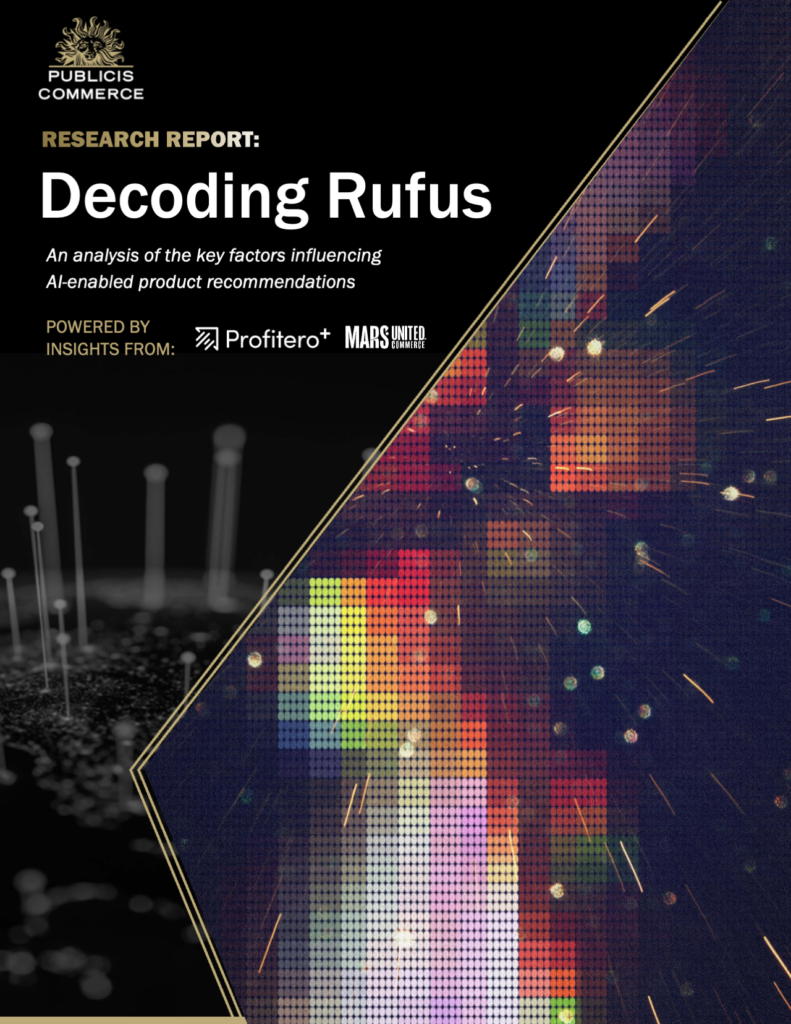 Artificial intelligence is rewriting the longstanding rules of retail search by reshaping how shoppers discover and buy products online.
In 2025, retailer AI assistants led by Amazon’s Rufus and Walmart’s Sparky shifted rapidly from unique experiments to commonplace shopping companions, capable of understanding complex queries and surfacing tailored recommendations.
At the same time, third-party platforms like ChatGPT and other agentic search platforms began to bridge product discovery and purchase through integrations enabling users to buy directly through retailers such as Walmart, Shopify, Etsy, Target, and Instacart.
This new era of Agentic Commerce — where AI acts as both advisor and checkout channel — is evolving faster than most brands have been able to react, let alone adapt. Amid all the headlines and hype, one reality stands out: brands lack a validated, evidence-based way to optimize their presence within these emerging AI-driven environments.
The stakes are rising quickly: According to Amazon, Rufus attracted more than 300 million users in 2025 — and they were 60% more likely than mainstream searchers to buy the recommended product. As these AI assistants mature, they’ll not only influence which products are seen, but how shoppers will evaluate, compare, and buy.
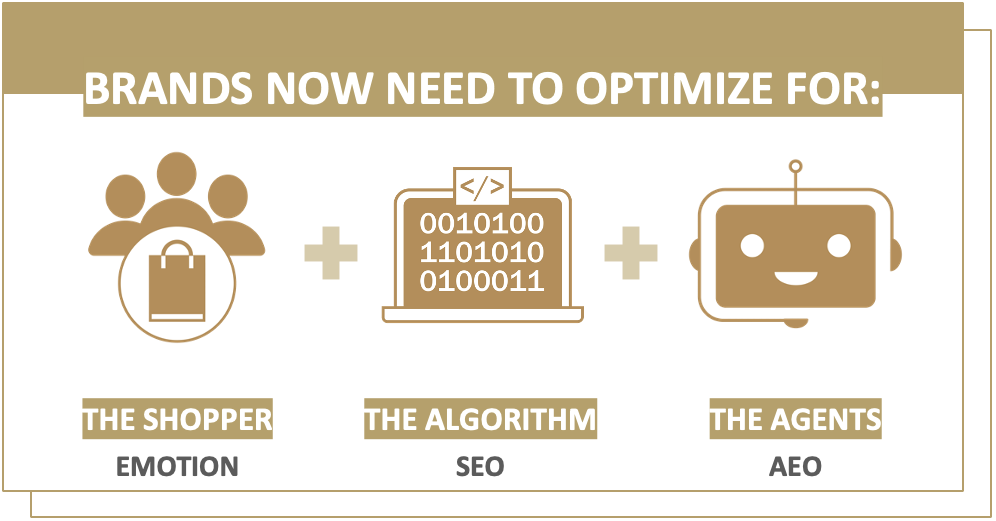 Brands now need to elevate their visibility to three “audiences”:
- The Shopper
- The Search Algorithm
- The Agent
SEO needs to make room for AEO (“Agentic Engine Optimization”) or GEO (“Generative Engine Optimization”), and Share of Voice analysis must now also include “SOAR,” or “Share of Agentic Recommendations.”
Since AI-assisted shopping began dominating the industry conversation, numerous opinion pieces have proposed various strategies and tactics for improving brand visibility. Yet few have validated these ideas with real data or applied experimentation, creating a knowledge gap between theory and proof that is widening substantially as adoption rates for agentic platforms continue to climb.
To address this, Publicis Commerce united the complementary expertise of Mars United and Profitero+, who partnered with several brand clients to measure their visibility within Rufus, identify high-impact/low-effort content edits that could be made to align with conversational search behavior, and quantify the impact of those changes.
Our goal was to test whether common, relatively simple changes — such as improving product attributes and other product detail page content — could deliver meaningful gains in a brand’s SOAR. This report presents our findings.