

A session hosted by Publicis Sapient outlined two options for retailers looking to start their journey.
By Michele Roney, EVP of Retailer CX, Mars United Commerce
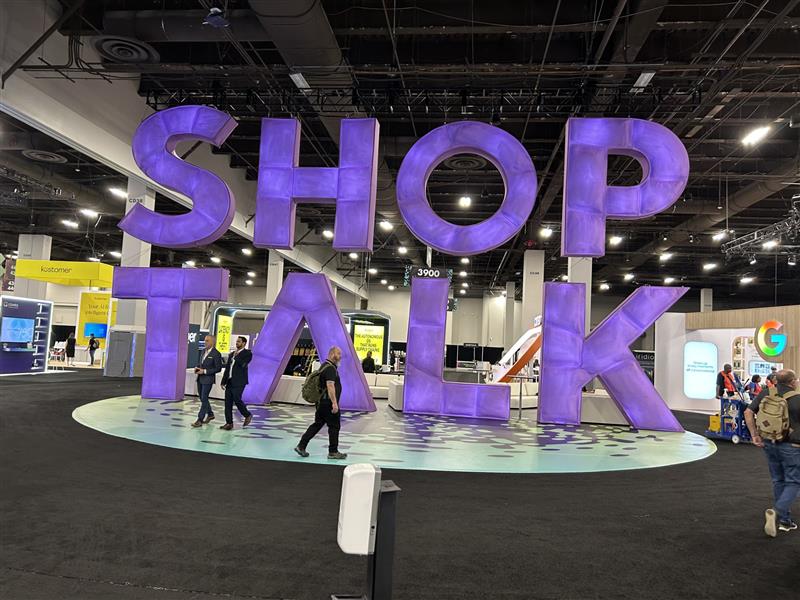
If Shoptalk Spring had a drinking game based on AI mentions, the level of intoxication experience at the show would have been crazy — even by Las Vegas standards.
There now are a sea of use cases for AI optimization in the commerce marketplace, which can make it hard for retailers to prioritize the opportunities available to them and the potential impact they can have on the organization. But I attended one session hosted by our Public Sapient friends and colleagues at Publicis Sapient that did a really good job of breaking down two of the more common AI workstreams that we’re seeing: speed to market and agentic commerce.
Speed to Market
Two retailers participated in the session, one representing the loyalty function (Amanda Bailey, VP-Customer Marketing & Loyalty at Lowe’s Companies) and one from a retail media network (Evan Hovorka VP-Product and Innovation at Albertsons Media Collective).
 It was interesting to hear that, from their respective sides of the organization, these executives are often dealing with similar issues — especially in the case of speed to market, where various stakeholders have to align with the process needed to automate and then optimize workflows with AI. Retailer go-to-market strategies are still siloed, so it demands constant internal negotiation to establish a single process that will make wholly effective AI execution possible.
But the best advice these retailers gave was to avoid trying to boil the ocean by taking on too much change at once. Look at the project and find a little bit of time to work with each stakeholder. Begin by automating any small part of the process so you’re accelerating the plan, reducing time with each stage that you undertake.
Agentic Commerce
Retailers will encounter similar internal issues when implementing agentic commerce because a lot of people need to get involved to make it work. There is plenty of experimentation going on right now because scrappy teams are able to launch their own pilots, but scaling across the organization requires a huge leap that can easily lead to failure.
The best advice from the retailers here was to avoid implementing AI just for the sake of keeping up with the times; do it because you have a clear objective in mind. If your agent isn’t doing anything to help your customers buy or your associates sell, don’t do it. Wait until you have clearly identified ways to do one or the other. If you haven’t mapped out your process from search to sale, you won’t be able to properly train your agent.
It helps to start with a customer-first strategy that all stakeholders can rally around. Speed to market and other operational efficiencies, after all, will be worthless if you end up alienating your customers by not satisfying their needs or delivering a poor experience. It’s also critical to get all your customer data housed in one place — don’t move forward without taking this initial step.
The sea of AI opportunities is getting wider every day, so it helps for retailers to have clear guidelines like these to help them chart a course and start navigating the journey ahead of them.
About the Author
 As EVP at Mars United Commerce, Michele Roney leads the Retailer CX business, which helps retailers drive growth through marketing, customer experience design, and the creation, operationalization, and monetization of retail media networks. A 35-year company veteran with experience across retail marketing, media and promotion, she has led the ground-up development, management, and support of leading retail media networks both in the U.S. and Canada.