
With agentic commerce accelerating the pace of innovation to a dizzying level, Mars United’s Ecommerce team has put together this special overview of recent activity at leading retailers covered in the Digital Shelf Report as a supplement to the Fall 2025 edition published in December. The goal is to keep brands and retailers up to date on how agentic search and other AI-enabled tools are transforming the way consumers discover and buy products, and the strategies leading ecommerce players are using to stay ahead of the changes.
And check out the most recent Digital Shelf Report from Mars United’s Ecommerce practice.
Albertsons
Albertsons Companies has introduced an AI shopping assistant to the websites of all banners in its portfolio. Powered by OpenAI models and branded simply as Albertsons AI, the assistant can build smarter baskets and hold intelligent two-way conversations, with the aim of streamlining grocery shopping time from an average of 46 minutes to as little as four, according to a release.
Going beyond the Ask AI search solution the company launched last year, Albertsons AI can reorder frequently purchased products, generate a meal plan and corresponding shopping list, shop handwritten grocery lists, generate recipes based on available ingredients, build carts from an online recipe or image, and curate product ideas (with accompanying deals and coupons) based on a theme or holiday. The retailer says early shopper adoption of both tools is already driving strong engagement and double-digit basket growth.
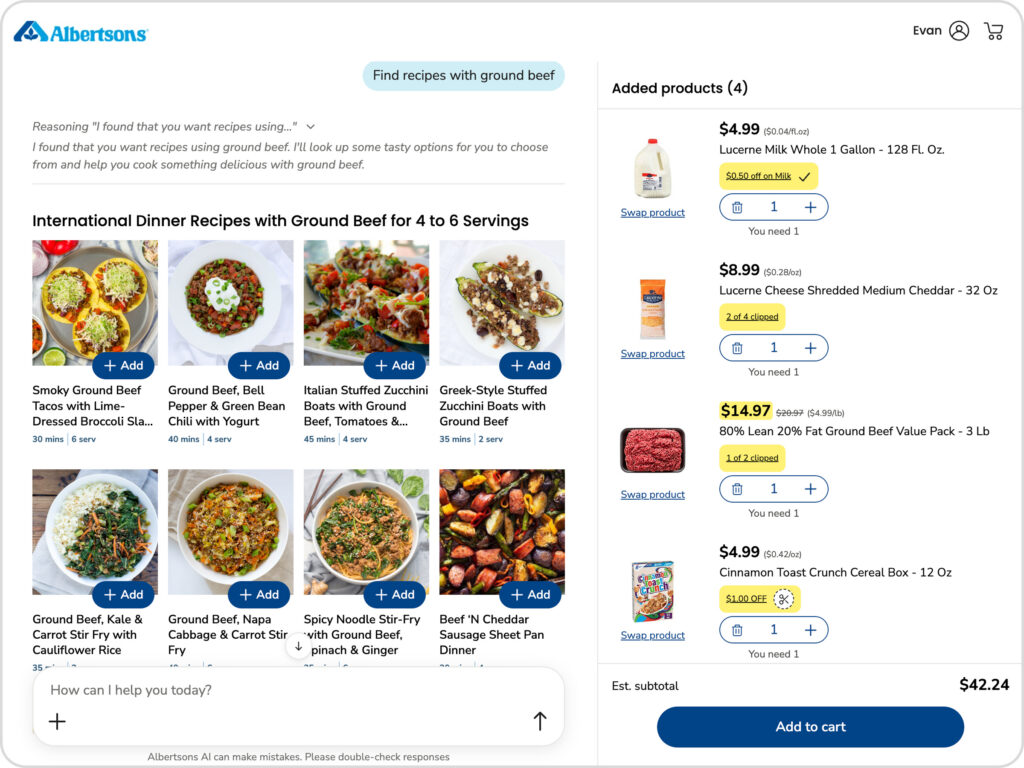
The grocer intends to expand the assistant to mobile apps in early 2026, adding additional agentic commerce capabilities such as budget optimization, in-store aisle location, and voice integration.
Albertsons is also participating in OpenAI’s pilot ad program for ChatGPT. “We’re focused on advertising that enhances the customer journey, instead of interrupting it. By testing ads in ChatGPT, we’re growing our engagement with new customers and continuing to connect with our current customers in meaningful ways,” said Jennifer Saenz, Albertsons’ Chief Commercial Officer, in a release.
____________
Amazon
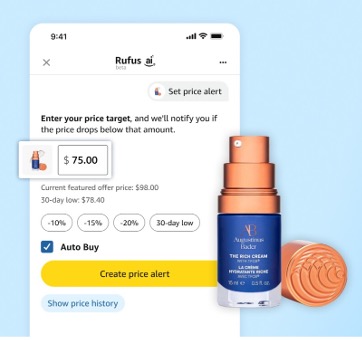
The ecommerce leader upgraded its Rufus AI shopping assistant for Prime members with an agentic function that will automatically buy products when they go on sale. These auto-buy requests will remain active for six months (or until cancelled by the user), with Rufus checking every 30 minutes and making purchases when the item hits a specified price threshold. (Non-Prime members, meanwhile, can sign up to receive price alerts.) Rufus now also provides 30- and 90-day price histories for products on request.
Additionally, Rufus is expanding its memory beyond an individual account’s shopping activity to include interactions with Amazon devices and services such as Prime Video, Kindle, and Audible. Amazon says this will enable the agent to provide more relevant, personalized answers and product search results while also letting shoppers ask for previously browsed or shopped products to be reordered.
Amazon asserts that Rufus can also surface tens of millions of products not currently sold through its own marketplace and, for some items, make purchases on behalf of shoppers using the “Buy For Me” Roughly 300 million shoppers globally consulted with Rufus in 2025, helping deliver nearly $12 billion in incremental sales, according to Amazon. Monthly users increased 149% year over year, with interactions rising 210%. Significantly, shoppers who use Rufus during a purchase journey are 60% more likely to convert, Amazon says.
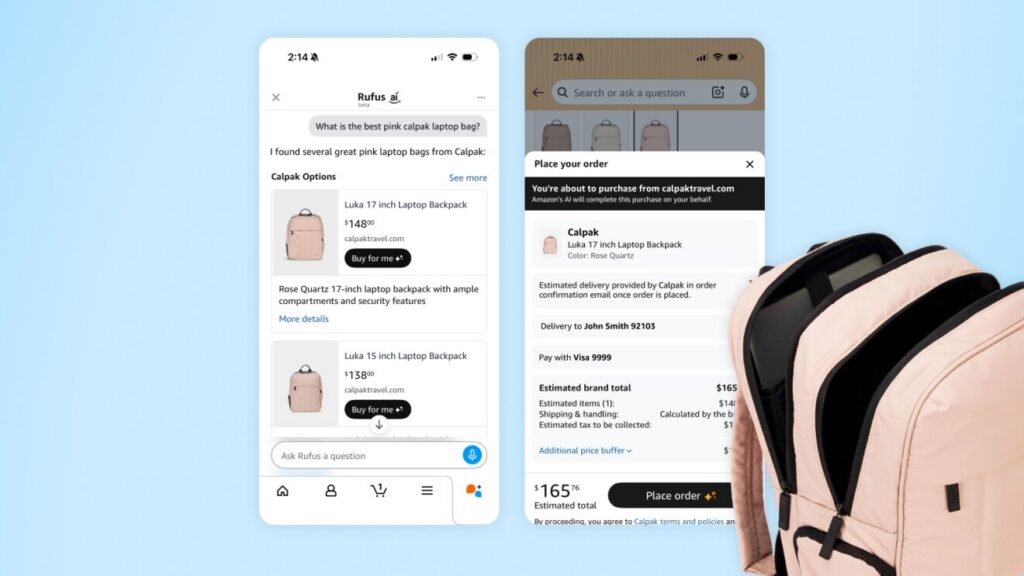
The retailer also updated Alexa+, its “OG” conversational AI assistant, by launching a web-based version to expand its presence beyond voice and mobile platforms to desktop browsers — and consumers without a compatible Amazon smart home device. The Alexa+ website features a navigation sidebar that provides quicker access to the tool’s most-used features, which include smart home controls and shopping lists. Additionally, the retailer is redesigning the Alexa mobile app to be more “agent-forward,” promising consistent context between devices and interfaces.
Since unveiling Alexa+ in 2025 with a new capability to remember all previous chats and personal preferences, conversations have doubled, purchases have tripled, and recipe requests have quintupled, according to Amazon.
____________
DoorDash
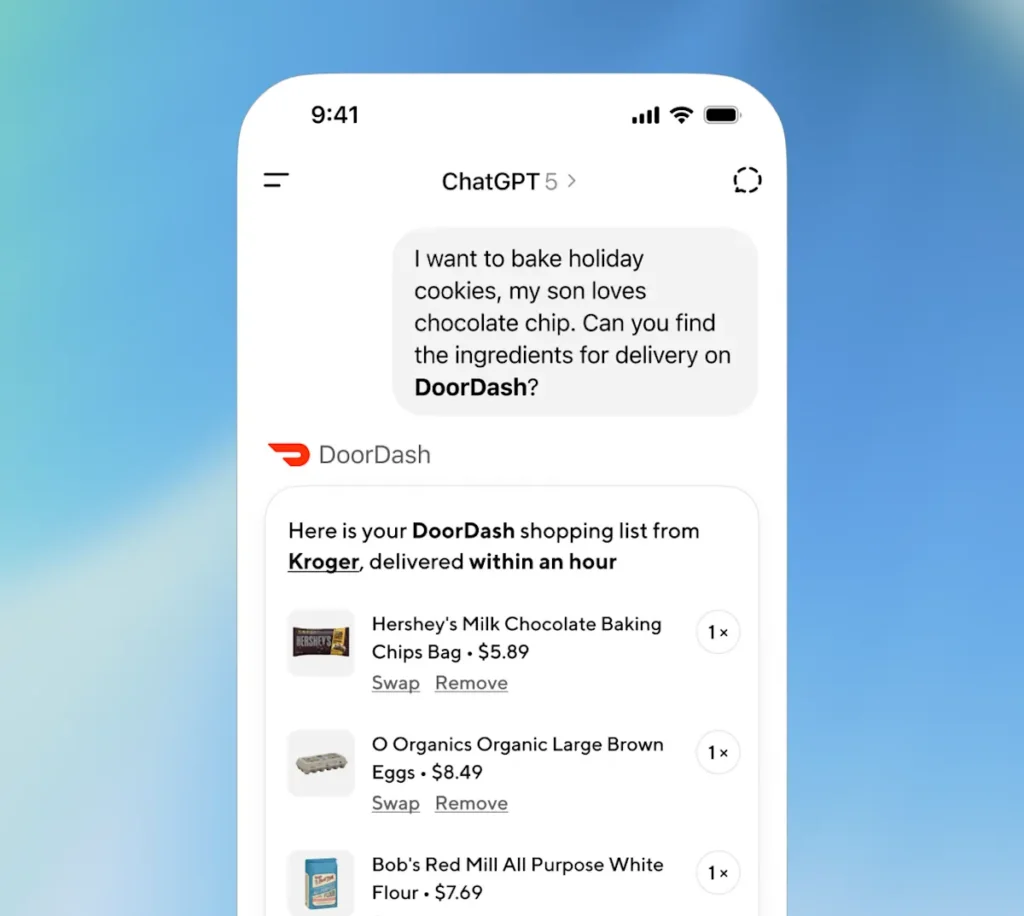
DoorDash recently introduced its previously announced ChatGPT app (on the heels of rival Instacart’s rollout), promising to turn recipes into shoppable grocery lists containing all required ingredients and enabling easy checkout in minutes — all within the search agent’s native environment. The DoorDash app lets shoppers order multiple products at once, functionality that ChatGPT’s own Instant Checkout app can’t yet do. DoorDash ultimately plans to expand the integration beyond groceries to additional product categories.
“AI is unlocking an entirely new search and discovery experience for consumers that’s dynamic and personalized,” said DoorDash co-founder Andy Fang. “As we expand this experience to more shopping categories, our focus is on building AI tools that give people time back and make local shopping easier.”
In the San Francisco Bay Area and New York, DoorDash is also testing an AI-powered social app for finding local restaurants dubbed Zesty that lets users ask a chatbot for recommendations in plain language.
____________
Kroger
Kroger plans to roll out a personal shopping “companion” built on Google Cloud’s new agentic platform, Gemini Enterprise for Customer Experience. This meal/shopping assistant will convert meal requests into recipes paired with shoppable ingredient lists, compare product details, reorder past purchases, and build complex shopping carts for major lifestyle occasions — making purchase recommendations informed by real-time assortment, pricing, and availability, according to a release. The technology is intended to serve as a “comprehensive digital concierge across every customer touchpoint,” with reports indicating it will be accessible via Kroger stores and digital platforms.

“A customer planning a week of dinners, seeking recipe inspiration, or jumping into a new food regimen will be able to ask our integrated assistant to create a shopping list based on their immediate needs, their budget, and [their] family’s unique preferences,” explained Yael Cosset, Kroger’s Chief Digital Officer. “We are streamlining every aspect of the shopping experience, from building a basket and getting relevant offers and savings to scheduling a delivery faster than ever before.”
The retailer will also tap into Google Cloud’s Customer Experience Agent Studio to analyze interactions on calls made by shoppers to stores to proactively identify and resolve customer-service issues, the company said.
In other agentic activity, Kroger is working with Instacart to integrate the on-demand delivery partner’s new Cart Assistant conversational AI agent into its iOS app.
____________
Lowe’s Home Improvement
Count Lowe’s among the retailers leveraging Google’s Gemini Enterprise for Customer Experience — in this case, to enhance Mylow, the retailer’s AI-enabled home improvement advisor. The infusion will empower Mylow “to provide guidance personalized to a customer’s home, their project, and where they live, bringing new levels of confidence to every decision,” said Seemantini Godbole, Chief Digital and Information Officer at Lowe’s, in a release issued by Google.
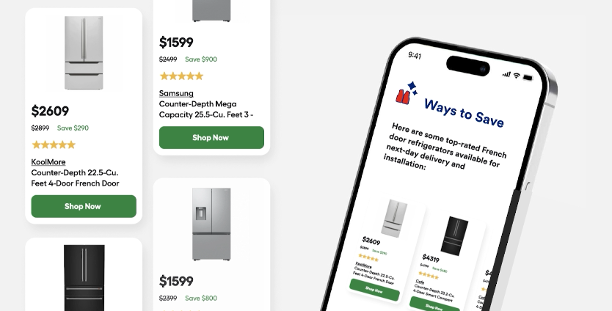
Lowe’s additionally has augmented Mylow with voice capabilities to better help users seeking assistance with comprehensive projects.
The retailer launched Mylow in early 2025 for members of the MyLowe’s Rewards loyalty program through a partnership with OpenAI, and continues to work with several vendors to power the tool. The retailer says conversion rates more than double when shoppers use Mylow.
____________
Target

Target likewise has tapped Google’s UCP to embed its core online shopping experience directly into Gemini. The chatbot will soon surface Target’s product listings and let shoppers make purchases directly from the retailer without leaving the chat.
Elsewhere, the retailer has been piloting contextual retail media ad placements since launching an app directly within ChatGPT last November. Triggered by keywords within a user’s prompt, sponsored ads from Target and select partners from the Roundel retail media network are appearing alongside relevant ChatGPT responses. The ads are clearly labeled and appear as distinct promotional units differentiated from the agent’s responses.
“We’re excited to co-develop a new standard for the future of commerce with Google and others,” said Prat Vemana, Target’s EVP and Chief Information and Product Officer, in a corporate post. “[UCP] will help us bring Target’s curation and value into [Google’s conversational, agentic search interface] AI Mode and the Gemini app, making it easier for consumers to discover and purchase on-trend, design-forward products — all with an experience that feels natural, helpful, and built around their needs.”
Internet analytics company SimilarWeb estimates that 15% of Target’s referral traffic is already coming from ChatGPT; the retailer itself says the traffic has been growing by 40% each month.
Additionally, Target enhanced its own store app with several AI-driven, shopper-facing tools, including a conversational gift finder, list-to-cart scanning of handwritten lists, and smart in-store navigation that recommends alternative fulfillment methods if products are unavailable. Chief Guest Experience Officer Cara Sylvester noted in a release that the basket size of in-store app users is nearly 50% larger than those of other shoppers.
____________
The Home Depot

In yet another Gemini integration, The Home Depot is upgrading its Magic Apron customer assistant to create an “AI-first” integrated experience that’s personalized and contextual. Accessible via the retailer’s website and mobile app, Magic Apron’s expanded suite of AI tools will let shoppers describe their projects in plain language to receive conversational advice and personalized recommendations. The tool will soon gain other advanced multi-modal capabilities including image upload and visualization, according to a release. And a forthcoming store experience will integrate real-time inventory to present aisle-specific product locations.
In the coming months, the capabilities will expand beyond the retailer’s owned platforms into AI Mode in Google Search and the Gemini app.
____________
Uber
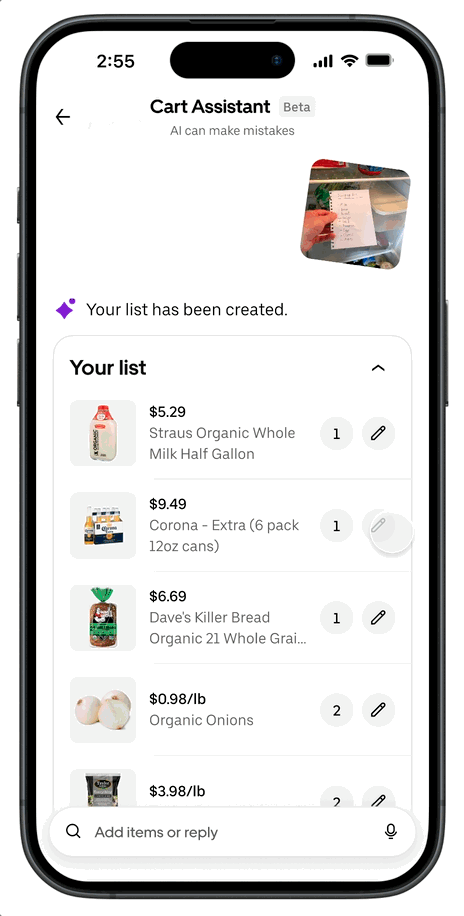
Uber launched an AI-powered feature in the Uber Eats app that can build baskets “in seconds” from tangible items such as typed shopping lists, images of handwritten lists, and screenshots of recipe ingredients. Dubbed Cart Assistant, the tool automatically references product availability and past Uber Eats orders to prioritize familiar items, and presents store-level details including prices and promotions, explained Chief Technology Officer Praveen Neppalli Naga in a corporate post.
The tool is currently available for use with dozens of Uber Eats grocery partners including Albertsons, Aldi, Kroger, and Safeway, with more to follow.
____________
Walmart
Walmart established a pioneering shopping integration with Google’s Gemini agent using the search giant’s new open-standard Universal Commerce Protocol (UCP). Through the integration, Gemini will automatically include products from Walmart and Sam’s Club in responses to relevant queries from users, who then can make purchases directly from the retailers without leaving the platform.
In addition, Gemini users who link their Walmart or Sam’s Club accounts will receive recommendations for complementary products based on personal purchase history and be able to have their Gemini purchases fulfilled along with products from their Walmart/Sam’s Club carts, among other benefits. The experience is rolling out in stages in the U.S. before expanding internationally, with no exact timeline indicated by the partners.
The alliance with Google follows Walmart’s integration with OpenAI’s ChatGPT that launched last November.
“The transition from traditional web or app search to agent-led commerce represents the next great evolution in retail. We aren’t just watching the shift — we are driving it,” said John Furner, who this month transitioned from CEO of Walmart U.S. to CEO of Walmart, Inc.
The retailer is also putting agentic AI at the forefront of its internal shopper app strategy. It recently added several AI-powered features to its mobile app that are designed to simplify product discovery, event planning, and in-store navigation:
- Generative AI assistant Sparky can now curate shopping lists based on occasion-specific needs.
- New AI-generated audio summaries (currently available for some 1,000 premium beauty products) synthesize product descriptions and reviews into short, conversational sound bites.
- Augmented reality showrooms let shoppers explore dynamic 3D interiors and add showcased products directly into their carts.
- An in-store savings tool presents location-specific deals, with category filters and price comparisons viewable on one screen.
- Enhanced store search and navigation tools provide real-time product availability and locations.
- Digital shopping lists automatically get sorted by aisle in stores.
Walmart reports that in-store shoppers spend about 25% more when they use the app during trips.
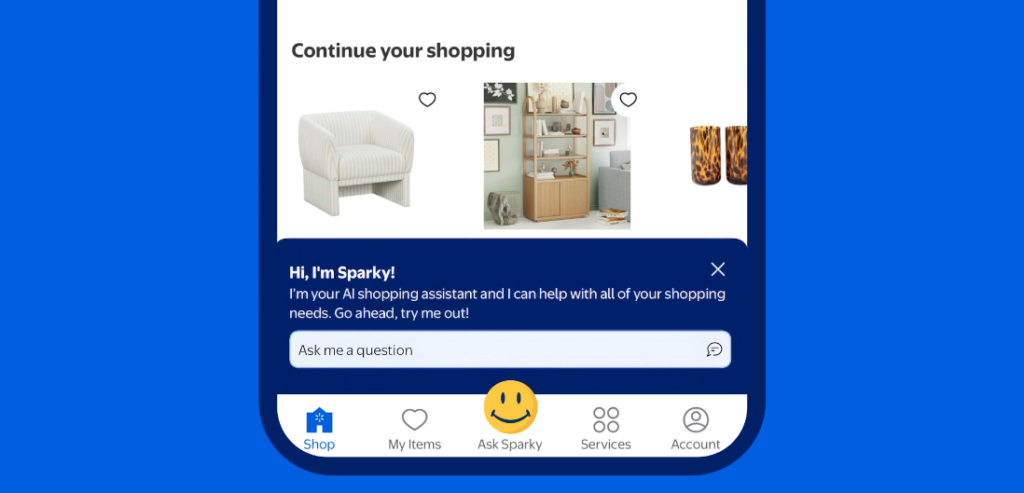
Meanwhile, the retailer is continuing to infuse Sparky with advertising, with tests of various ad formats that began last fall and will continue throughout 2026, said Khurrum Malik, Walmart Connect’s VP of Business & Product Marketing, in a corporate post. According to Adweek, ads are appearing as sponsored prompts alongside organic suggestions when shoppers ask Sparky for product recommendations. In a survey of Walmart customers, Walmart reports that 81% of shoppers have used Sparky to look up product availability and details about a product before buying.
To learn how Mars United Commerce’s Ecommerce team can help you excel across all facets of the digital shelf, contact SVP-Ecommerce Tyrel Beutler at [email protected].