
Brands should act quickly to maintain control and avoid any potential impact on visibility and conversion.
Digital commerce marketers are busy optimizing for Prime Day this week, but they now have another very important date on their calendar: July 27.
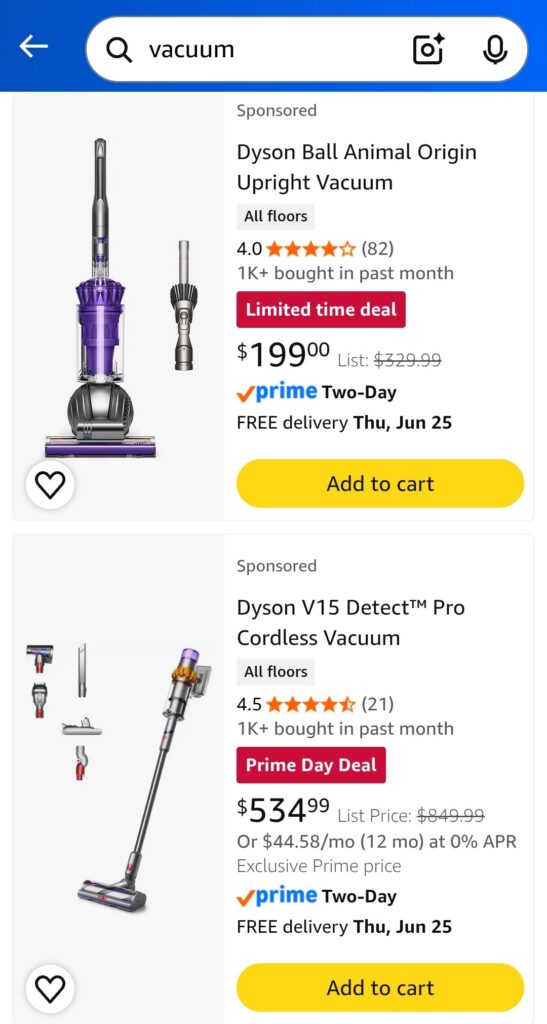
That’s the day Amazon will begin enforcing new content rules that limit product titles to 75 characters — less than half the prior 200-character threshold. The move formalizes the ecommerce leader’s evolving mobile-first strategy: an estimated 62% of Amazon’s site traffic comes from mobile phones, where only 70 to 80 characters from current titles are typically visible. “This ensures that your title will fully display on mobile and is consistent with the title length used by other online stores,” Amazon said in a post on Amazon Seller Central.
Those other 125-odd characters aren’t going away entirely, though. Amazon is introducingan “Item Highlights” section “for sharing materials or recommended use cases that help customers compare options. This content is searchable and visible with titles in search results and on product detail pages,” according to the post.These Item Highlights effectively create a critical new content field that will need to be populated and managed across all Amazon ASINs (including within PIM systems).
Amazon is directing brand partners to make the necessary changes in Amazon Vendor (or Seller) Central using its internal “AI-powered tools,” which will deliver recommendations that “keep your key product information in the title and move additional details to Item Highlights.” Amazon’s internal tools don’t offer mass-update options and will therefore require brands to make changes one SKU at a time.
After July 27, Amazon will “gradually” begin updating non-compliant titles on its own (starting with Best Sellers) and give brands 14 days to review, modify, and approve before the recommended changes go live, according to the post. A Profitero+ review found that more than 60% of current listings qualify as non-compliant.
In the meantime, non-compliant product listings will remain active, but over time could have a significantly negative impact on search visibility and performance. And leaving the changes up to Amazon AI could substantially take a brand’s own positioning strategy and keyword prioritization out of the equation.
Recommendations for Brands
To avoid negative impact on click-through and conversion rates, brands should map their keyword coverage to ensure that the highest-priority terms remain in either the title or the Item Highlights, with secondary terms addressed in bullets and other content as well as back-end fields.
Rather than simply shifting 125 characters from the title to the new field, brands should strategically reconstruct their titles and create Item Highlights using a clear, cohesive structure:
- Title: Brand, product type, primary differentiator.
- Highlights: Selling points, use cases, key features, secondary keywords.
Manually updating product listings, one by one, across the full Amazon catalog is a time-consuming task that, in all likelihood, will be impossible for brands to manage before the July 27 deadline. Brands should assign a project owner who can get started once Prime Day is over and begin auditing the catalog, prioritizing based on gross sales value.
Technology partners that can help restructure titles and build Item Highlights at scale could prove instrumental to achieving the goal. Analytics-rich companies that can use existing keyword and performance signals to inform the changes while ensuring brand validation — and then evaluate performance to optimize the changes moving forward — will be crucial to success.
To learn more about how Profitero+ and Mars United Commerce can deliver these services to ensure brands have their catalogs ready to go by July 27, contact VP-Ecommerce Emily Baynard at [email protected].